Insomnia
Difficulty falling or staying asleep, why it happens, and how healthy sleep habits help.
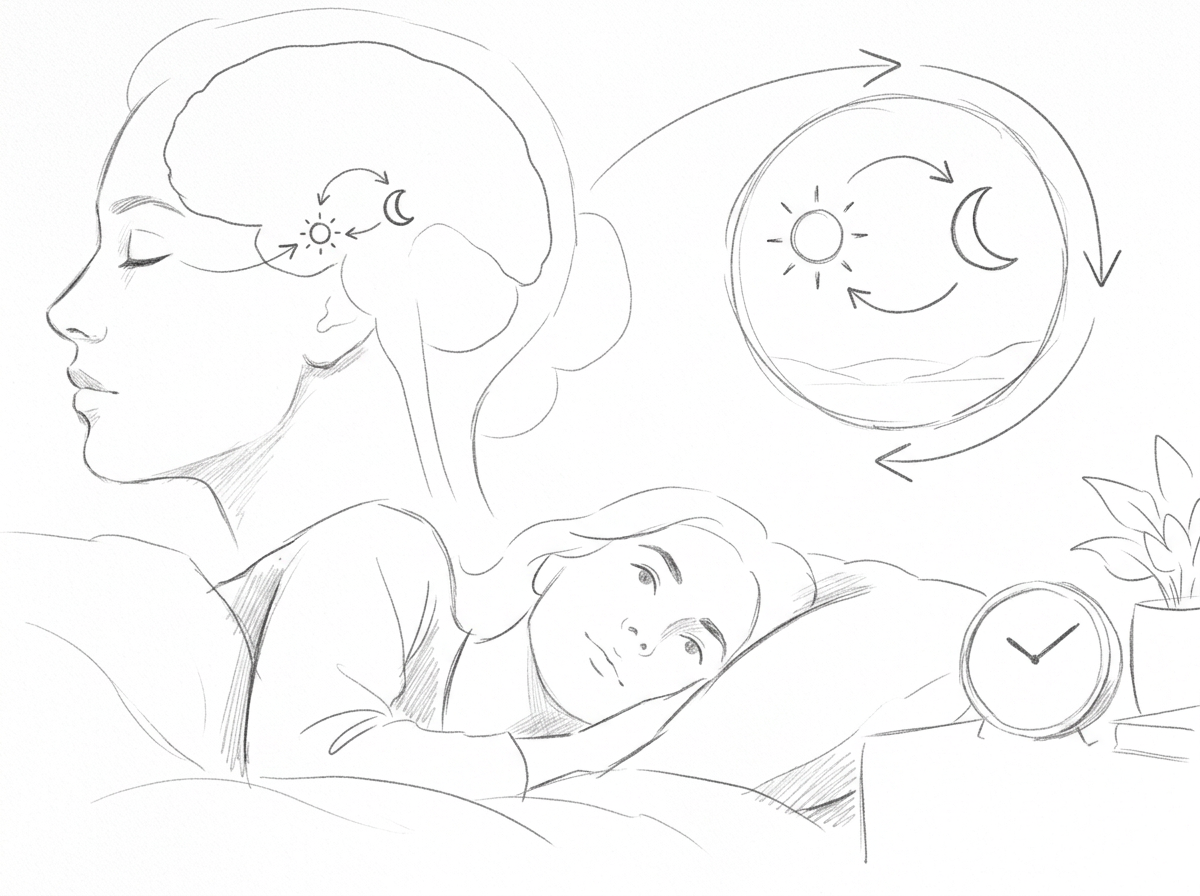
Sleep and wakefulness are influenced by the body’s daily rhythm. Insomnia involves difficulty falling or staying asleep.
AI-generated schematic illustration; not a clinical image.
Understanding the topic
Insomnia is a common sleep disorder in which a person has trouble falling asleep, staying asleep, or wakes too early and cannot return to sleep, despite having enough opportunity to sleep. Short-term insomnia lasts days or weeks and often follows stress or a upsetting event. Chronic insomnia occurs at least three nights a week for three months or more. Poor sleep leaves people tired, irritable, and less able to concentrate during the day. Stress is the most frequent trigger, but many factors contribute: irregular schedules, shift work, jet lag, caffeine and nicotine late in the day, alcohol, heavy meals before bed, and screens in the bedroom. Medical conditions such as pain, breathing problems, and frequent urination interrupt sleep, as do depression and anxiety. Some medicines disturb sleep. Insomnia becomes more common with age and is more frequent in women. During sleep the body repairs tissues, consolidates memory, and regulates hormones that control appetite, stress, and growth. Chronic poor sleep is associated with a higher risk of high blood pressure, heart disease, diabetes, obesity, and depression, as well as accidents and errors at work or while driving. Most adults need seven to eight hours of sleep per night, though individual needs vary. The first-line treatment for chronic insomnia is cognitive behavioral therapy for insomnia, which changes the thoughts and habits that perpetuate poor sleep. Good sleep hygiene includes a consistent sleep schedule, a dark quiet cool bedroom, regular exercise earlier in the day, and avoiding caffeine, alcohol, and screens before bed. Sleeping pills may help short term but are not a long-term solution and can cause dependence and side effects.
Lesson 1
When sleep does not come & What disrupts sleep
When sleep does not come
Insomnia is a common sleep disorder in which a person has trouble falling asleep, staying asleep, or wakes too early and cannot return to sleep, despite having enough opportunity to sleep. Short-term insomnia lasts days or weeks and often follows stress or a upsetting event. Chronic insomnia occurs at least three nights a week for three months or more. Poor sleep leaves people tired, irritable, and less able to concentrate during the day.
What disrupts sleep
Stress is the most frequent trigger, but many factors contribute: irregular schedules, shift work, jet lag, caffeine and nicotine late in the day, alcohol, heavy meals before bed, and screens in the bedroom. Medical conditions such as pain, breathing problems, and frequent urination interrupt sleep, as do depression and anxiety. Some medicines disturb sleep. Insomnia becomes more common with age and is more frequent in women.
Lesson 2
Why sleep matters & Sleep hygiene and treatment
Why sleep matters
During sleep the body repairs tissues, consolidates memory, and regulates hormones that control appetite, stress, and growth. Chronic poor sleep is associated with a higher risk of high blood pressure, heart disease, diabetes, obesity, and depression, as well as accidents and errors at work or while driving. Most adults need seven to eight hours of sleep per night, though individual needs vary.
Sleep hygiene and treatment
The first-line treatment for chronic insomnia is cognitive behavioral therapy for insomnia, which changes the thoughts and habits that perpetuate poor sleep. Good sleep hygiene includes a consistent sleep schedule, a dark quiet cool bedroom, regular exercise earlier in the day, and avoiding caffeine, alcohol, and screens before bed. Sleeping pills may help short term but are not a long-term solution and can cause dependence and side effects.
Study guide
- Explain when sleep does not come.
- Explain what disrupts sleep.
- Explain why sleep matters.
- Explain sleep hygiene and treatment.
- When sleep does not come
- Insomnia is a common sleep disorder in which a person has trouble falling asleep, staying asleep, or wakes too early and cannot return to sleep, despite having enough opportunity to sleep.
- What disrupts sleep
- Stress is the most frequent trigger, but many factors contribute: irregular schedules, shift work, jet lag, caffeine and nicotine late in the day, alcohol, heavy meals before bed, and screens in the bedroom.
- Why sleep matters
- During sleep the body repairs tissues, consolidates memory, and regulates hormones that control appetite, stress, and growth.
- Sleep hygiene and treatment
- The first-line treatment for chronic insomnia is cognitive behavioral therapy for insomnia, which changes the thoughts and habits that perpetuate poor sleep.
Lessons
Sources
- MedlinePlus en español — Insomniahttps://medlineplus.gov/spanish/insomnia.html
Original educational summaries; not a diagnosis or treatment plan. Read by a medical doctor and confirmed reliable, pending formal approval. Sources come from approved websites.