Celiac Disease
Celiac disease is a chronic immune and digestive disorder in which gluten exposure damages the small intestine.
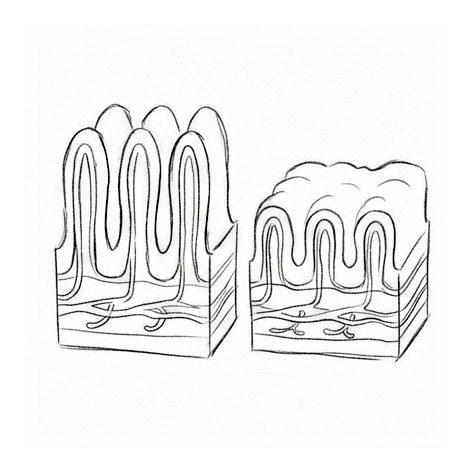
Celiac disease damages the small intestine’s villi, reducing nutrient absorption.
AI-generated schematic illustration; not a clinical image.
Understanding the topic
Celiac disease is a chronic immune and digestive disorder in which gluten exposure damages the small intestine. Gluten is found in wheat, barley, and rye and can occur in swallowed supplements or other products. Injury reduces absorption of nutrients. Genes and exposure contribute together, although the exact cause is not fully understood. The condition can therefore affect nutrition throughout the body rather than causing only temporary discomfort after a meal. Wheat allergy and gluten sensitivity can resemble celiac disease but do not produce the same characteristic intestinal damage. Clinicians use history, blood tests, and small-intestinal biopsies, often collected during upper endoscopy. A similar symptom is not evidence that conditions are interchangeable. The distinction matters because their mechanisms, evaluation, and management differ. Tissue examination and laboratory results add evidence that a person cannot obtain from a symptom checklist alone.
Lesson 1
Gluten and immune injury & Digestive and extraintestinal symptoms
Gluten and immune injury
Celiac disease is a chronic immune and digestive disorder in which gluten exposure damages the small intestine. Gluten is found in wheat, barley, and rye and can occur in swallowed supplements or other products. Injury reduces absorption of nutrients. Genes and exposure contribute together, although the exact cause is not fully understood. The condition can therefore affect nutrition throughout the body rather than causing only temporary discomfort after a meal.
Digestive and extraintestinal symptoms
Bloating, pain, diarrhea, constipation, nausea, or greasy stools may occur. Children may fail to gain enough weight; adults may lose weight. Fatigue, mouth sores, bone or joint pain, and dermatitis herpetiformis are other possibilities. Some people have few symptoms. Untreated disease can contribute to iron-deficiency anemia, bone loss, nerve problems, or reproductive difficulties. A lack of obvious digestive symptoms does not exclude ongoing intestinal injury.
Lesson 2
Distinguishing allergy and sensitivity & A lifelong gluten-free diet
Distinguishing allergy and sensitivity
Wheat allergy and gluten sensitivity can resemble celiac disease but do not produce the same characteristic intestinal damage. Clinicians use history, blood tests, and small-intestinal biopsies, often collected during upper endoscopy. A similar symptom is not evidence that conditions are interchangeable. The distinction matters because their mechanisms, evaluation, and management differ. Tissue examination and laboratory results add evidence that a person cannot obtain from a symptom checklist alone.
A lifelong gluten-free diet
A lifelong gluten-free diet controls disease and supports intestinal healing. A dietitian can help preserve adequate nutrition while excluding gluten. Ingredient labels and hidden sources in swallowed products matter, and manufacturers may need to clarify uncertain ingredients. Gluten is not absorbed through intact skin, but accidental swallowing can cause exposure. Avoidance is an ongoing treatment strategy, not something needed only when diarrhea or discomfort becomes noticeable.
Study guide
- Explain gluten and immune injury.
- Explain digestive and extraintestinal symptoms.
- Explain distinguishing allergy and sensitivity.
- Explain a lifelong gluten-free diet.
- Gluten and immune injury
- Celiac disease is a chronic immune and digestive disorder in which gluten exposure damages the small intestine.
- Digestive and extraintestinal symptoms
- Bloating, pain, diarrhea, constipation, nausea, or greasy stools may occur.
- Distinguishing allergy and sensitivity
- Wheat allergy and gluten sensitivity can resemble celiac disease but do not produce the same characteristic intestinal damage.
- A lifelong gluten-free diet
- A lifelong gluten-free diet controls disease and supports intestinal healing.
Lessons
Sources
- MedlinePlus en español — Celiac Diseasehttps://medlineplus.gov/spanish/celiacdisease.html
Original educational summaries; not a diagnosis or treatment plan. Read by a medical doctor and confirmed reliable, pending formal approval. Sources come from approved websites.