Type 2 Diabetes
Glucose supplies energy, and insulin helps it enter body cells.
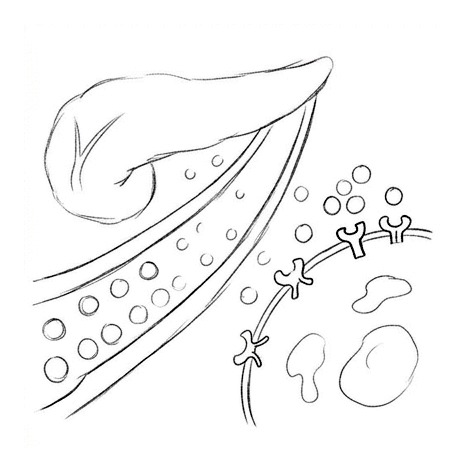
Insulin helps glucose enter cells; insulin resistance allows glucose to build up in the bloodstream.
AI-generated schematic illustration; not a clinical image.
Understanding the topic
Glucose supplies energy, and insulin helps it enter body cells. Type 2 diabetes usually begins when cells respond poorly to insulin, called insulin resistance. The body initially makes more insulin to compensate but eventually may not meet demand. Glucose accumulates in the bloodstream. Excess weight, inactivity, and family factors can contribute together; persistently high glucose can damage the eyes, kidneys, nerves, and heart. Many people have no noticeable symptoms. Blood tests diagnose diabetes rather than symptoms alone. Hemoglobin A1C estimates average blood glucose over the preceding two or three months. Fasting plasma glucose measures the current level after a fasting period; random plasma glucose measures a current level without waiting for fasting. These tests describe different aspects of blood glucose. An isolated symptom or a home reading is not equivalent to a clinical diagnosis.
Lesson 1
Insulin resistance and glucose buildup & Slow symptoms and silent disease
Insulin resistance and glucose buildup
Glucose supplies energy, and insulin helps it enter body cells. Type 2 diabetes usually begins when cells respond poorly to insulin, called insulin resistance. The body initially makes more insulin to compensate but eventually may not meet demand. Glucose accumulates in the bloodstream. Excess weight, inactivity, and family factors can contribute together; persistently high glucose can damage the eyes, kidneys, nerves, and heart. Many people have no noticeable symptoms.
Slow symptoms and silent disease
Many people have no noticeable symptoms. When symptoms occur, they may develop over several years and be mild enough to overlook. Increased thirst, urination, and hunger can occur with fatigue and blurred vision. Numbness or tingling, poorly healing sores, and unexplained weight loss are other possibilities. Feeling well does not demonstrate normal glucose, which is why appropriate testing matters. Blood tests diagnose diabetes rather than symptoms alone.
Lesson 2
A1C versus a current glucose reading & Managing glucose and reducing risk
A1C versus a current glucose reading
Blood tests diagnose diabetes rather than symptoms alone. Hemoglobin A1C estimates average blood glucose over the preceding two or three months. Fasting plasma glucose measures the current level after a fasting period; random plasma glucose measures a current level without waiting for fasting. These tests describe different aspects of blood glucose. An isolated symptom or a home reading is not equivalent to a clinical diagnosis.
Managing glucose and reducing risk
Management combines healthy eating, activity, and glucose monitoring. Some people also need oral medicines, insulin, or other injections, and more than one medicine may eventually be required. Blood pressure and cholesterol deserve attention as well. For people at risk, losing excess weight and increasing activity can help prevent or delay diabetes. Food, activity, and prescribed treatment work together rather than replacing one another. Glucose supplies energy, and insulin helps it enter body cells.
Study guide
- Explain insulin resistance and glucose buildup.
- Explain slow symptoms and silent disease.
- Explain a1c versus a current glucose reading.
- Explain managing glucose and reducing risk.
- Insulin resistance and glucose buildup
- Glucose supplies energy, and insulin helps it enter body cells.
- Slow symptoms and silent disease
- Many people have no noticeable symptoms.
- A1C versus a current glucose reading
- Blood tests diagnose diabetes rather than symptoms alone.
- Managing glucose and reducing risk
- Management combines healthy eating, activity, and glucose monitoring.
Lessons
Sources
- MedlinePlus en español — Type 2 Diabeteshttps://medlineplus.gov/spanish/diabetestype2.html
- MedlinePlus en español — Prueba de hemoglobina A1chttps://medlineplus.gov/spanish/pruebas-de-laboratorio/prueba-de-hemoglobina-a1c/
Original educational summaries; not a diagnosis or treatment plan. Read by a medical doctor and confirmed reliable, pending formal approval. Sources come from approved websites.