Tuberculosis: Latent Infection and Active Disease
Mycobacterium tuberculosis usually affects lungs but can involve kidneys, spine, or brain.
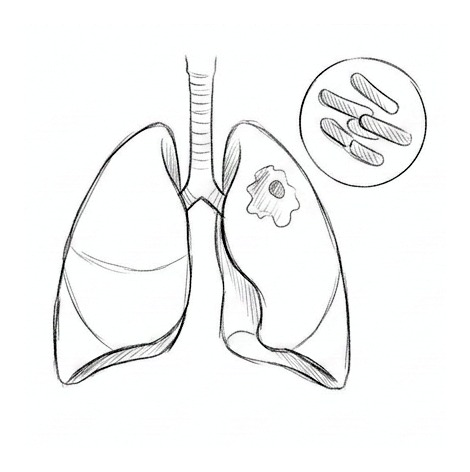
Tuberculosis is caused by bacteria. Active pulmonary disease can damage lung tissue.
AI-generated schematic illustration; not a clinical image.
Understanding the topic
Mycobacterium tuberculosis usually affects lungs but can involve kidneys, spine, or brain. Active lung or throat disease releases germs into air during coughing, speaking, sneezing, or singing. Others can inhale them. Touching or sharing food is not the route described. Prolonged contact gives more opportunity for exposure. Transmission concerns breathing contaminated air, which explains why the site and activity of disease matter for spread. Latent infection means bacteria remain without causing symptoms, and the person cannot transmit TB. Active disease may cause fever, night sweats, weight loss, poor appetite, weakness, and fatigue. Lung disease can cause cough longer than three weeks, sputum or blood, and chest pain. Symptoms depend partly on the involved site. HIV, diabetes, weakened immunity, very young age, or older age increase progression risk after infection. Exposure, infection, and development of active illness are separate concerns rather than one inevitable sequence.
Lesson 1
Airborne spread of tuberculosis bacteria & Latent infection versus active illness
Airborne spread of tuberculosis bacteria
Mycobacterium tuberculosis usually affects lungs but can involve kidneys, spine, or brain. Active lung or throat disease releases germs into air during coughing, speaking, sneezing, or singing. Others can inhale them. Touching or sharing food is not the route described. Prolonged contact gives more opportunity for exposure. Transmission concerns breathing contaminated air, which explains why the site and activity of disease matter for spread. Latent infection means bacteria remain without causing symptoms, and the person cannot transmit TB.
Latent infection versus active illness
Latent infection means bacteria remain without causing symptoms, and the person cannot transmit TB. It can later become active, particularly when immune defenses weaken. Active disease involves multiplying bacteria causing illness. Treatment of latent infection reduces future progression risk. Feeling well therefore does not mean bacteria are absent, while infection evidence does not automatically establish active contagious lung disease. These distinctions guide further assessment and care.
Lesson 2
Symptoms and susceptibility & Tests and completing treatment
Symptoms and susceptibility
Active disease may cause fever, night sweats, weight loss, poor appetite, weakness, and fatigue. Lung disease can cause cough longer than three weeks, sputum or blood, and chest pain. Symptoms depend partly on the involved site. HIV, diabetes, weakened immunity, very young age, or older age increase progression risk after infection. Exposure, infection, and development of active illness are separate concerns rather than one inevitable sequence.
Tests and completing treatment
Blood or skin tests show evidence of infection; chest imaging and sputum evaluation help distinguish active lung disease. Latent and active forms are treated with antibiotics according to the prescribed plan. Stopping when symptoms improve can leave bacteria and contribute to resistance. Infection tests alone do not answer every question about activity. Completing directions and follow-up supports effective treatment instead of assuming feeling better means the infection is fully addressed.
Study guide
- Explain airborne spread of tuberculosis bacteria.
- Explain latent infection versus active illness.
- Explain symptoms and susceptibility.
- Explain tests and completing treatment.
- Airborne spread of tuberculosis bacteria
- Mycobacterium tuberculosis usually affects lungs but can involve kidneys, spine, or brain.
- Latent infection versus active illness
- Latent infection means bacteria remain without causing symptoms, and the person cannot transmit TB.
- Symptoms and susceptibility
- Active disease may cause fever, night sweats, weight loss, poor appetite, weakness, and fatigue.
- Tests and completing treatment
- Blood or skin tests show evidence of infection; chest imaging and sputum evaluation help distinguish active lung disease.
Lessons
Sources
- MedlinePlus en español — Tuberculosis: Latent Infection and Active Diseasehttps://medlineplus.gov/spanish/tuberculosis.html
Original educational summaries; not a diagnosis or treatment plan. Read by a medical doctor and confirmed reliable, pending formal approval. Sources come from approved websites.