Osteoporosis
Bone is living tissue that is continually removed and replaced.
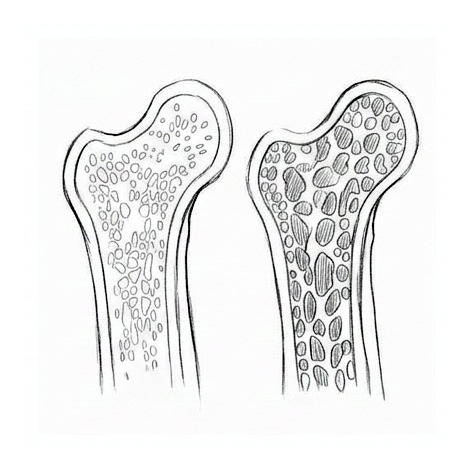
Osteoporosis weakens bone; its internal supporting structure becomes less dense.
AI-generated schematic illustration; not a clinical image.
Understanding the topic
Bone is living tissue that is continually removed and replaced. Osteoporosis can develop when removal exceeds replacement, reducing mass and weakening internal structure. Strength depends on mineral density as well as tissue organization. Fragile bones fracture more easily, commonly at the hip, wrist, or spine. The disease often causes no symptoms before a fracture, which explains why assessment cannot depend solely on whether bones hurt. Assessment reviews medical and family history, medicines, and lifestyle. Height loss or posture changes may be relevant. Bone mineral density testing measures mineral content and helps identify reduced density before fractures occur. Blood or urine tests may investigate other contributors to bone loss. The measurement is interpreted alongside fracture risk and history, rather than assuming one value captures every aspect of skeletal health or explains its cause.
Lesson 1
Remodeling and structural weakness & Hormones, medicines, and nutritional risks
Remodeling and structural weakness
Bone is living tissue that is continually removed and replaced. Osteoporosis can develop when removal exceeds replacement, reducing mass and weakening internal structure. Strength depends on mineral density as well as tissue organization. Fragile bones fracture more easily, commonly at the hip, wrist, or spine. The disease often causes no symptoms before a fracture, which explains why assessment cannot depend solely on whether bones hurt.
Hormones, medicines, and nutritional risks
Risk rises with age and is particularly important after menopause. Low hormone levels, a thin build, and family history can contribute. Inadequate calcium, vitamin D, or protein also matters. Long-term corticosteroid treatment and some digestive, endocrine, or inflammatory conditions can increase vulnerability. Men can also develop osteoporosis. Several factors may combine, so neither age nor sex alone fully describes a person’s bone strength or risk.
Lesson 2
Bone density and broader evaluation & Strengthening bone and preventing falls
Bone density and broader evaluation
Assessment reviews medical and family history, medicines, and lifestyle. Height loss or posture changes may be relevant. Bone mineral density testing measures mineral content and helps identify reduced density before fractures occur. Blood or urine tests may investigate other contributors to bone loss. The measurement is interpreted alongside fracture risk and history, rather than assuming one value captures every aspect of skeletal health or explains its cause.
Strengthening bone and preventing falls
Care aims to prevent fractures by supporting bone and reducing injury opportunities. Calcium, vitamin D, protein, and suitable weight-bearing or strengthening activity can help. Avoid tobacco and excessive alcohol. Fall prevention addresses circumstances in which fragile bones may break. Medicines may slow loss or support bone formation when appropriate. These approaches complement each other: fewer falls do not replace bone assessment, and stronger bones do not eliminate all injury risks.
Study guide
- Explain remodeling and structural weakness.
- Explain hormones, medicines, and nutritional risks.
- Explain bone density and broader evaluation.
- Explain strengthening bone and preventing falls.
- Remodeling and structural weakness
- Bone is living tissue that is continually removed and replaced.
- Hormones, medicines, and nutritional risks
- Risk rises with age and is particularly important after menopause.
- Bone density and broader evaluation
- Assessment reviews medical and family history, medicines, and lifestyle.
- Strengthening bone and preventing falls
- Care aims to prevent fractures by supporting bone and reducing injury opportunities.
Lessons
Sources
- MedlinePlus en español — Osteoporosishttps://medlineplus.gov/spanish/osteoporosis.html
Original educational summaries; not a diagnosis or treatment plan. Read by a medical doctor and confirmed reliable, pending formal approval. Sources come from approved websites.