Nervous System Organization and Evaluation
The central nervous system consists of brain and spinal cord.
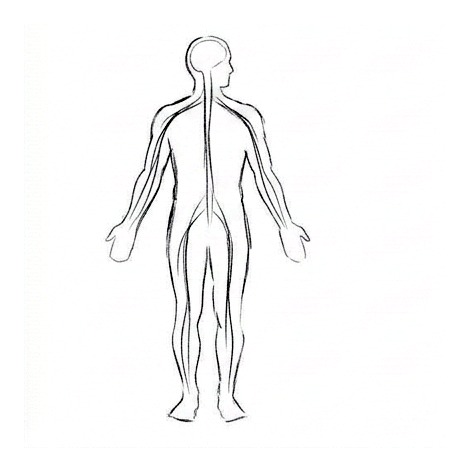
The brain and spinal cord form the central nervous system; peripheral nerves connect it to the body.
AI-generated schematic illustration; not a clinical image.
Understanding the topic
The central nervous system consists of brain and spinal cord. Peripheral nerves outside them connect to the head, limbs, and trunk. Brain functions include thoughts, emotion, memory, and behavior as well as movement and sensation. The division separates a main processing center from its connections with other regions. This organization helps explain why damage at different locations can produce different problems instead of one uniform neurological symptom. CT and MRI provide images, while EEG examines brain electrical activity. Electromyography evaluates nerve and muscle activity. Lumbar puncture can investigate infection or cerebrospinal-fluid pressure. Disorders include tumors, vascular problems, infections, injury, epilepsy, and degeneration. Tests are selected for the suspected problem rather than one examination proving every diagnosis. Clinical assessment and appropriate investigations combine information about structure, function, and possible causes. Care may involve medicines, procedures, surgery, or rehabilitation.
Lesson 1
Central and peripheral organization & Somatic and autonomic functions
Central and peripheral organization
The central nervous system consists of brain and spinal cord. Peripheral nerves outside them connect to the head, limbs, and trunk. Brain functions include thoughts, emotion, memory, and behavior as well as movement and sensation. The division separates a main processing center from its connections with other regions. This organization helps explain why damage at different locations can produce different problems instead of one uniform neurological symptom.
Somatic and autonomic functions
Somatic components control muscles and carry sensory information from structures such as eyes, ears, mouth, and skin. Autonomic components regulate internal processes including blood pressure, breathing, and digestion. These responsibilities differ but work within the nervous system. A neurological problem is therefore not limited to weakness or numbness; the affected function depends on the involved components. Internal regulation and conscious movement are related but distinct aspects of nervous-system work.
Lesson 2
Tests answer different neurological questions & Treatment and rehabilitation roles
Tests answer different neurological questions
CT and MRI provide images, while EEG examines brain electrical activity. Electromyography evaluates nerve and muscle activity. Lumbar puncture can investigate infection or cerebrospinal-fluid pressure. Disorders include tumors, vascular problems, infections, injury, epilepsy, and degeneration. Tests are selected for the suspected problem rather than one examination proving every diagnosis. Clinical assessment and appropriate investigations combine information about structure, function, and possible causes. Care may involve medicines, procedures, surgery, or rehabilitation.
Treatment and rehabilitation roles
Care may involve medicines, procedures, surgery, or rehabilitation. Physical therapists address movement, strength, balance, and flexibility. Occupational therapists support home and work functioning; speech-language therapists address communication and understanding. Medicines can address pain, infection, or immune-related problems. Different conditions require different combinations. Neurological care often involves several professionals because recovering everyday function may require more than treating the original disease process alone. The central nervous system consists of brain and spinal cord.
Study guide
- Explain central and peripheral organization.
- Explain somatic and autonomic functions.
- Explain tests answer different neurological questions.
- Explain treatment and rehabilitation roles.
- Central and peripheral organization
- The central nervous system consists of brain and spinal cord.
- Somatic and autonomic functions
- Somatic components control muscles and carry sensory information from structures such as eyes, ears, mouth, and skin.
- Tests answer different neurological questions
- CT and MRI provide images, while EEG examines brain electrical activity.
- Treatment and rehabilitation roles
- Care may involve medicines, procedures, surgery, or rehabilitation.
Lessons
Sources
- MedlinePlus en español — Nervous System Organization and Evaluationhttps://medlineplus.gov/spanish/ency/article/007456.htm
Original educational summaries; not a diagnosis or treatment plan. Read by a medical doctor and confirmed reliable, pending formal approval. Sources come from approved websites.