Bacteria, Infection, and Antibiotic Resistance
Bacteria are tiny single-celled organisms occurring in many environments and on or inside the human body.
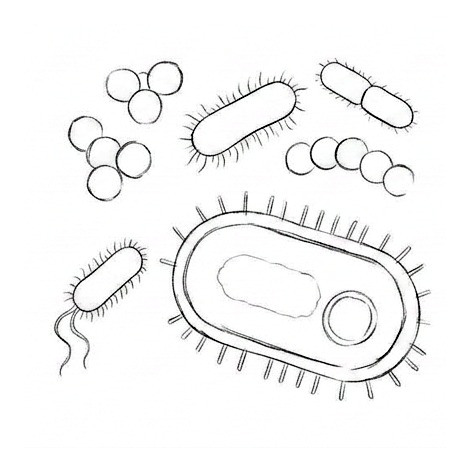
Bacteria vary in shape. Some develop resistance to antibiotics that previously controlled them.
AI-generated schematic illustration; not a clinical image.
Understanding the topic
Bacteria are tiny single-celled organisms occurring in many environments and on or inside the human body. They may be round, rod-shaped, or spiral-shaped. Most types do not cause illness. Digestive bacteria can support food processing and nutrient absorption, and bacteria help produce yogurt or cheese. Their presence alone does not prove infection. Eliminating all bacteria would not be equivalent to protecting health because some perform useful functions. Antibiotics kill bacteria or stop their growth and multiplication. They do not treat viruses such as those causing colds or influenza. Even some bacterial illnesses improve without antibiotics, so treatment depends on the specific assessment. Fever alone is not a reason to choose an antibiotic. Using one for a viral illness provides no benefit against that virus and introduces avoidable medicine-related risks and pressure favoring resistant organisms.
Lesson 1
Not all bacteria cause disease & Damage and transmission routes
Not all bacteria cause disease
Bacteria are tiny single-celled organisms occurring in many environments and on or inside the human body. They may be round, rod-shaped, or spiral-shaped. Most types do not cause illness. Digestive bacteria can support food processing and nutrient absorption, and bacteria help produce yogurt or cheese. Their presence alone does not prove infection. Eliminating all bacteria would not be equivalent to protecting health because some perform useful functions.
Damage and transmission routes
Some bacteria multiply rapidly, release toxins, or invade tissues and cause damage. Spread can occur through respiratory droplets, contaminated objects, wounds, skin contact, food, or water. Sexual contact, animal or insect bites, and transmission during pregnancy are routes for some infections. The route varies with the organism. Prevention therefore needs to address the actual exposure rather than assuming one identical method explains every bacterial illness.
Lesson 2
Antibiotics act on susceptible bacteria & Resistance and responsible use
Antibiotics act on susceptible bacteria
Antibiotics kill bacteria or stop their growth and multiplication. They do not treat viruses such as those causing colds or influenza. Even some bacterial illnesses improve without antibiotics, so treatment depends on the specific assessment. Fever alone is not a reason to choose an antibiotic. Using one for a viral illness provides no benefit against that virus and introduces avoidable medicine-related risks and pressure favoring resistant organisms.
Resistance and responsible use
Resistance occurs when bacteria change so an antibiotic is less effective against them. It is not a person becoming immune to a medicine. Unnecessary or inappropriate use contributes to the problem. Take antibiotics only when prescribed and follow directions rather than sharing or saving leftovers. Hygiene, food safety, and appropriate vaccination reduce infections and treatment needs. Preventing spread and preserving antibiotic effectiveness are connected public-health goals.
Study guide
- Explain not all bacteria cause disease.
- Explain damage and transmission routes.
- Explain antibiotics act on susceptible bacteria.
- Explain resistance and responsible use.
- Not all bacteria cause disease
- Bacteria are tiny single-celled organisms occurring in many environments and on or inside the human body.
- Damage and transmission routes
- Some bacteria multiply rapidly, release toxins, or invade tissues and cause damage.
- Antibiotics act on susceptible bacteria
- Antibiotics kill bacteria or stop their growth and multiplication.
- Resistance and responsible use
- Resistance occurs when bacteria change so an antibiotic is less effective against them.
Lessons
Sources
- MedlinePlus en español — Bacteria, Infection, and Antibiotic Resistancehttps://medlineplus.gov/spanish/bacterialinfections.html
Original educational summaries; not a diagnosis or treatment plan. Read by a medical doctor and confirmed reliable, pending formal approval. Sources come from approved websites.