Cholesterol and Cardiovascular Risk
Cholesterol is needed for hormones, vitamin D, and digestion-related substances, and the body makes what it needs.
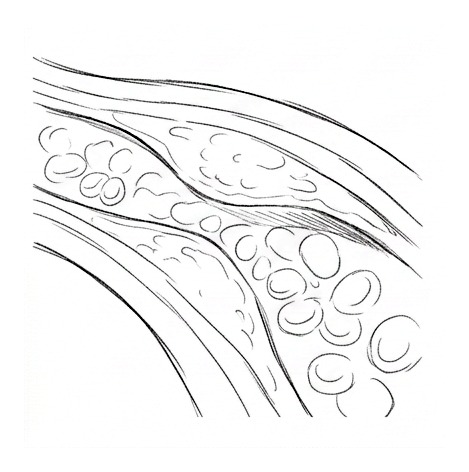
Plaque can build up inside arteries and reduce the space available for blood flow.
AI-generated schematic illustration; not a clinical image.
Understanding the topic
Cholesterol is needed for hormones, vitamin D, and digestion-related substances, and the body makes what it needs. Lipoproteins transport fats in blood. LDL mainly carries cholesterol; VLDL carries triglycerides. HDL carries cholesterol from tissues back to the liver for removal. Excess cholesterol can combine with other substances to form arterial plaque, narrowing or blocking vessels. Transport roles help explain why lipid testing reports several values. Blood testing measures cholesterol. Appropriate screening depends on age, risk factors, and family history. Inherited conditions such as familial hypercholesterolemia can cause high levels, so an unhealthy lifestyle is not the only explanation. Results must be interpreted alongside other cardiovascular risks. Comparing values over time can help evaluate management, while one number alone does not describe every aspect of a person’s vascular health. Heart-healthy eating, activity, and weight management support control.
Lesson 1
Lipoproteins and arterial plaque & Silent elevation and vascular consequences
Lipoproteins and arterial plaque
Cholesterol is needed for hormones, vitamin D, and digestion-related substances, and the body makes what it needs. Lipoproteins transport fats in blood. LDL mainly carries cholesterol; VLDL carries triglycerides. HDL carries cholesterol from tissues back to the liver for removal. Excess cholesterol can combine with other substances to form arterial plaque, narrowing or blocking vessels. Transport roles help explain why lipid testing reports several values.
Silent elevation and vascular consequences
High cholesterol usually has no signs or symptoms. Its significance is related to plaque accumulation rather than a reliable warning sensation. Coronary, carotid, and peripheral arteries can be affected, increasing risk of coronary disease or stroke. Lack of symptoms does not establish a healthy cholesterol level. Testing and risk assessment matter because vascular changes can develop while a person feels well and notices no distinctive physical change.
Lesson 2
Blood tests and family context & Habits and cholesterol-lowering treatment
Blood tests and family context
Blood testing measures cholesterol. Appropriate screening depends on age, risk factors, and family history. Inherited conditions such as familial hypercholesterolemia can cause high levels, so an unhealthy lifestyle is not the only explanation. Results must be interpreted alongside other cardiovascular risks. Comparing values over time can help evaluate management, while one number alone does not describe every aspect of a person’s vascular health. Heart-healthy eating, activity, and weight management support control.
Habits and cholesterol-lowering treatment
Heart-healthy eating, activity, and weight management support control. Saturated fat can raise LDL; inactivity and smoking can affect the lipoprotein pattern. Medicines such as statins may be needed when habits alone are insufficient, and healthy habits should continue alongside them. Selected inherited cases may use lipoprotein apheresis to filter LDL from blood. Treatment choices reflect both modifiable influences and inherited causes, not one universal approach.
Study guide
- Explain lipoproteins and arterial plaque.
- Explain silent elevation and vascular consequences.
- Explain blood tests and family context.
- Explain habits and cholesterol-lowering treatment.
- Lipoproteins and arterial plaque
- Cholesterol is needed for hormones, vitamin D, and digestion-related substances, and the body makes what it needs.
- Silent elevation and vascular consequences
- High cholesterol usually has no signs or symptoms.
- Blood tests and family context
- Blood testing measures cholesterol.
- Habits and cholesterol-lowering treatment
- Heart-healthy eating, activity, and weight management support control.
Lessons
Sources
- MedlinePlus en español — Cholesterol and Cardiovascular Riskhttps://medlineplus.gov/spanish/cholesterol.html
Original educational summaries; not a diagnosis or treatment plan. Read by a medical doctor and confirmed reliable, pending formal approval. Sources come from approved websites.