Airways and Bronchiectasis
Bronchiectasis involves damage and lasting widening of larger airways.
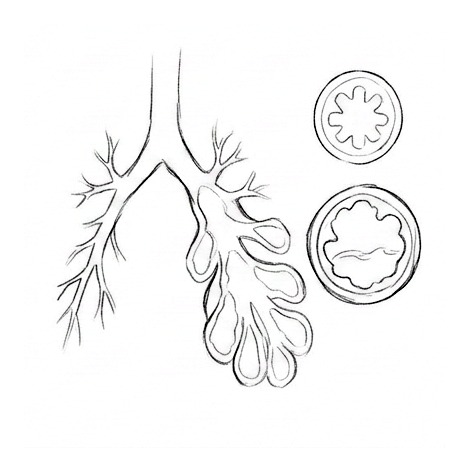
Bronchiectasis involves damaged, widened airways where mucus can accumulate.
AI-generated schematic illustration; not a clinical image.
Understanding the topic
Bronchiectasis involves damage and lasting widening of larger airways. It can begin in childhood or develop later. Repeated inflammation or infection is a common cause. Cystic fibrosis, immune deficiencies, some autoimmune disorders, or impaired cilia can contribute. This structural change differs from temporary tightening during an asthma episode. Identifying it helps explain why persistent mucus and infection concerns may continue instead of disappearing when a brief trigger resolves. Evaluation includes examination and listening for abnormal chest sounds. X-ray or CT examines structure, sputum culture investigates organisms, and lung-function testing measures breathing performance. Additional tests can assess contributors such as cystic fibrosis, immune deficiency, or past TB. These methods answer different questions. Finding airway damage and explaining its cause are separate parts of assessment, and multiple kinds of evidence may be needed to guide care.
Lesson 1
Permanent widening of damaged airways & Gradual symptoms and sputum
Permanent widening of damaged airways
Bronchiectasis involves damage and lasting widening of larger airways. It can begin in childhood or develop later. Repeated inflammation or infection is a common cause. Cystic fibrosis, immune deficiencies, some autoimmune disorders, or impaired cilia can contribute. This structural change differs from temporary tightening during an asthma episode. Identifying it helps explain why persistent mucus and infection concerns may continue instead of disappearing when a brief trigger resolves.
Gradual symptoms and sputum
Symptoms may develop months or years after the original damage. A long-lasting productive cough with substantial foul-smelling sputum is a main feature. Breathlessness during activity, wheezing, fatigue, weight loss, or coughing blood may occur. Low fever or night sweats are possible. The pattern is persistent, not one isolated cough. It combines ongoing symptoms with underlying damaged airways, requiring assessment rather than diagnosis from sputum appearance alone.
Lesson 2
Structure, infection, and breathing tests & Clearing mucus and treating infection
Structure, infection, and breathing tests
Evaluation includes examination and listening for abnormal chest sounds. X-ray or CT examines structure, sputum culture investigates organisms, and lung-function testing measures breathing performance. Additional tests can assess contributors such as cystic fibrosis, immune deficiency, or past TB. These methods answer different questions. Finding airway damage and explaining its cause are separate parts of assessment, and multiple kinds of evidence may be needed to guide care.
Clearing mucus and treating infection
Care aims to reduce infection and sputum, relieve obstruction, and prevent worsening. Daily drainage and respiratory exercises help remove mucus. Antibiotics address infection; bronchodilators open airways; other medicines may loosen sputum. Underlying causes also require attention. Worsening pain or breathing, changed sputum, or blood warrants professional contact. Surgery is reserved for selected cases. Mucus clearance supports a broader plan rather than guaranteeing damaged airways return to normal.
Study guide
- Explain permanent widening of damaged airways.
- Explain gradual symptoms and sputum.
- Explain structure, infection, and breathing tests.
- Explain clearing mucus and treating infection.
- Permanent widening of damaged airways
- Bronchiectasis involves damage and lasting widening of larger airways.
- Gradual symptoms and sputum
- Symptoms may develop months or years after the original damage.
- Structure, infection, and breathing tests
- Evaluation includes examination and listening for abnormal chest sounds.
- Clearing mucus and treating infection
- Care aims to reduce infection and sputum, relieve obstruction, and prevent worsening.
Lessons
Sources
- MedlinePlus en español — Airways and Bronchiectasishttps://medlineplus.gov/spanish/ency/article/000144.htm
Original educational summaries; not a diagnosis or treatment plan. Read by a medical doctor and confirmed reliable, pending formal approval. Sources come from approved websites.