Kidney Stones
Hard mineral deposits that form in the kidneys and can cause intense pain as they pass.
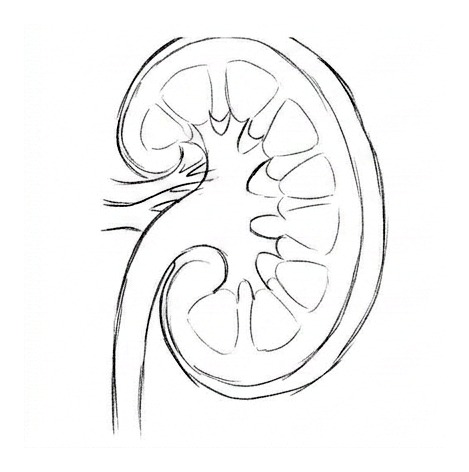
Kidney stones form from minerals and can move into the ureter, blocking urine flow.
AI-generated schematic illustration; not a clinical image.
Understanding the topic
Kidney stones are hard deposits of minerals and salts that form inside the kidneys. Urine normally contains substances that prevent crystals from forming, but when urine becomes concentrated, minerals such as calcium, oxalate, and uric acid can crystallize and stick together. Stones range from grains of sand to the size of a pebble. Small stones may pass unnoticed, while larger ones can block the flow of urine. Not drinking enough fluid is one of the most important risk factors. A stone that stays in the kidney may cause no symptoms. Symptoms begin when it moves into the ureter, the narrow tube between kidney and bladder. The hallmark is severe pain in the side and back, below the ribs, which may radiate to the lower abdomen and groin and come in waves. Other signs include pink, red, or brown urine, painful or frequent urination, nausea, vomiting, and fever if infection is present. Doctors diagnose stones with urine tests, blood tests, and imaging such as CT scans or ultrasound. Small stones usually pass on their own with plenty of fluids and pain relief; doctors may ask the person to strain urine to catch the stone for analysis. Larger stones that block urine flow or cause infection may need procedures: shock waves that break the stone into fragments, or endoscopic removal through the urinary tract. A person who has had one stone has a higher chance of another, so prevention matters. Drinking enough water to produce about two liters of urine a day is the single most effective measure. Depending on the stone type, doctors may recommend limiting salt, reducing oxalate-rich foods, or moderating animal protein. Analyzing a passed stone guides these choices, and some people benefit from medicines that make urine less likely to form crystals.
Lesson 1
How stones form & The pain of a passing stone
How stones form
Kidney stones are hard deposits of minerals and salts that form inside the kidneys. Urine normally contains substances that prevent crystals from forming, but when urine becomes concentrated, minerals such as calcium, oxalate, and uric acid can crystallize and stick together. Stones range from grains of sand to the size of a pebble. Small stones may pass unnoticed, while larger ones can block the flow of urine. Not drinking enough fluid is one of the most important risk factors.
The pain of a passing stone
A stone that stays in the kidney may cause no symptoms. Symptoms begin when it moves into the ureter, the narrow tube between kidney and bladder. The hallmark is severe pain in the side and back, below the ribs, which may radiate to the lower abdomen and groin and come in waves. Other signs include pink, red, or brown urine, painful or frequent urination, nausea, vomiting, and fever if infection is present.
Lesson 2
Diagnosis and treatment & Preventing new stones
Diagnosis and treatment
Doctors diagnose stones with urine tests, blood tests, and imaging such as CT scans or ultrasound. Small stones usually pass on their own with plenty of fluids and pain relief; doctors may ask the person to strain urine to catch the stone for analysis. Larger stones that block urine flow or cause infection may need procedures: shock waves that break the stone into fragments, or endoscopic removal through the urinary tract.
Preventing new stones
A person who has had one stone has a higher chance of another, so prevention matters. Drinking enough water to produce about two liters of urine a day is the single most effective measure. Depending on the stone type, doctors may recommend limiting salt, reducing oxalate-rich foods, or moderating animal protein. Analyzing a passed stone guides these choices, and some people benefit from medicines that make urine less likely to form crystals.
Study guide
- Explain how stones form.
- Explain the pain of a passing stone.
- Explain diagnosis and treatment.
- Explain preventing new stones.
- How stones form
- Kidney stones are hard deposits of minerals and salts that form inside the kidneys.
- The pain of a passing stone
- A stone that stays in the kidney may cause no symptoms.
- Diagnosis and treatment
- Doctors diagnose stones with urine tests, blood tests, and imaging such as CT scans or ultrasound.
- Preventing new stones
- A person who has had one stone has a higher chance of another, so prevention matters.
Lessons
Sources
- MedlinePlus en español — Kidney Stoneshttps://medlineplus.gov/spanish/kidneystones.html
Original educational summaries; not a diagnosis or treatment plan. Read by a medical doctor and confirmed reliable, pending formal approval. Sources come from approved websites.