Influenza
Influenza is a respiratory infection caused by influenza viruses.
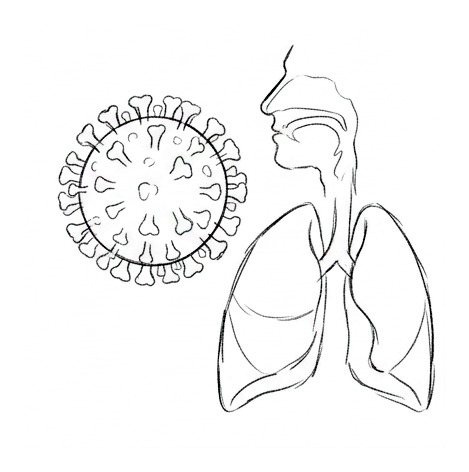
Influenza is a viral infection that affects the respiratory system.
AI-generated schematic illustration; not a clinical image.
Understanding the topic
Influenza is a respiratory infection caused by influenza viruses. Infected people release droplets during coughing, sneezing, or talking. Less commonly, contaminated-object contact followed by touching the face can transmit infection. Illness ranges from mild to severe or fatal. Older adults, young children, pregnant people, and people with certain chronic conditions are at greater risk of complications, making prevention and prompt assessment especially important. Symptoms often begin suddenly: feverishness, chills, cough, sore throat, congestion, headache, muscle aches, and fatigue. Assessment begins with history and symptoms. Tests use a swab from the nose or back of the throat to look for the virus. Some rapid tests provide results in roughly fifteen to twenty minutes but are less accurate than other methods. More accurate tests may take longer. Turnaround time and accuracy are different properties; a fast result should not be assumed to answer every diagnostic question.
Lesson 1
Influenza viruses and transmission & Sudden symptoms and complications
Influenza viruses and transmission
Influenza is a respiratory infection caused by influenza viruses. Infected people release droplets during coughing, sneezing, or talking. Less commonly, contaminated-object contact followed by touching the face can transmit infection. Illness ranges from mild to severe or fatal. Older adults, young children, pregnant people, and people with certain chronic conditions are at greater risk of complications, making prevention and prompt assessment especially important. Symptoms often begin suddenly: feverishness, chills, cough, sore throat, congestion, headache, muscle aches, and fatigue.
Sudden symptoms and complications
Symptoms often begin suddenly: feverishness, chills, cough, sore throat, congestion, headache, muscle aches, and fatigue. Vomiting or diarrhea can occur, especially in children. This abrupt pattern differs from the more gradual onset of a common cold. Complications can include pneumonia, ear or sinus infections, bronchitis, or inflammation affecting other organs. Influenza can worsen existing conditions, including provoking attacks in someone with asthma. Assessment begins with history and symptoms.
Lesson 2
History and respiratory swab testing & Annual vaccination and early care
History and respiratory swab testing
Assessment begins with history and symptoms. Tests use a swab from the nose or back of the throat to look for the virus. Some rapid tests provide results in roughly fifteen to twenty minutes but are less accurate than other methods. More accurate tests may take longer. Turnaround time and accuracy are different properties; a fast result should not be assumed to answer every diagnostic question.
Annual vaccination and early care
Most people recover without medical attention and should stay home with mild illness except to obtain care. Very ill, concerned, or high-risk people should contact a professional. Antivirals can reduce severity, duration, and complications and generally work best when started early. Annual influenza vaccination is the best preventive measure described. Handwashing and covering coughs provide additional protection but do not replace vaccination or assessment when needed.
Study guide
- Explain influenza viruses and transmission.
- Explain sudden symptoms and complications.
- Explain history and respiratory swab testing.
- Explain annual vaccination and early care.
- Influenza viruses and transmission
- Influenza is a respiratory infection caused by influenza viruses.
- Sudden symptoms and complications
- Symptoms often begin suddenly: feverishness, chills, cough, sore throat, congestion, headache, muscle aches, and fatigue.
- History and respiratory swab testing
- Assessment begins with history and symptoms.
- Annual vaccination and early care
- Most people recover without medical attention and should stay home with mild illness except to obtain care.
Lessons
Sources
- MedlinePlus en español — Influenzahttps://medlineplus.gov/spanish/flu.html
Original educational summaries; not a diagnosis or treatment plan. Read by a medical doctor and confirmed reliable, pending formal approval. Sources come from approved websites.