Germs, Hygiene, and Infection Prevention
Germs occur in air, soil, water, and on or within the body.
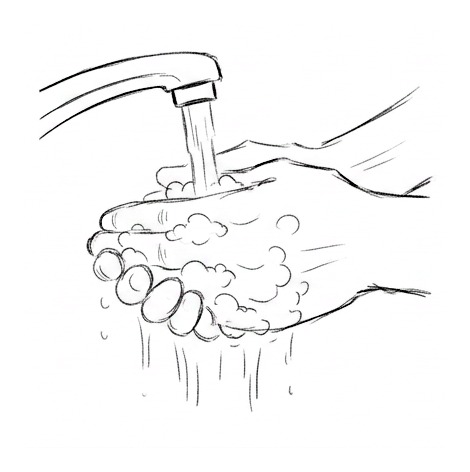
Washing hands with soap and water helps remove germs and reduce their spread.
AI-generated schematic illustration; not a clinical image.
Understanding the topic
Germs occur in air, soil, water, and on or within the body. Many are harmless or helpful; others cause disease. Groups include bacteria, viruses, fungi, and parasites. Spread can occur by close contact, respiratory particles, contaminated food or water, or touching a contaminated surface and then the face. Animal or insect bites and transmission during pregnancy or birth are additional routes for some infections. Coughing, sneezing, vomiting, and diarrhea create situations that require particular attention to hygiene. Food preparation, toilet use, diaper changes, wound care, animal handling, and contact with garbage are important times to clean hands. Frequently handled objects can transfer germs to the hands and then the eyes, nose, or mouth. Reviewing those contacts identifies practical prevention opportunities. It does not diagnose a specific infection; illness assessment and hygiene assessment address different questions even when both are relevant. Scrub hands for at least twenty seconds.
Lesson 1
Microorganisms and spread & Illness and exposure opportunities
Microorganisms and spread
Germs occur in air, soil, water, and on or within the body. Many are harmless or helpful; others cause disease. Groups include bacteria, viruses, fungi, and parasites. Spread can occur by close contact, respiratory particles, contaminated food or water, or touching a contaminated surface and then the face. Animal or insect bites and transmission during pregnancy or birth are additional routes for some infections. Coughing, sneezing, vomiting, and diarrhea create situations that require particular attention to hygiene.
Illness and exposure opportunities
Coughing, sneezing, vomiting, and diarrhea create situations that require particular attention to hygiene. Staying home when sick reduces contact and opportunities for spread. The presence of microorganisms alone does not prove infection because many normally live in the body. Prevention focuses on routes and exposure opportunities, rather than assuming all microbes are harmful or applying one disease symptom checklist to every infection. Food preparation, toilet use, diaper changes, wound care, animal handling, and contact with garbage are important times to clean hands.
Lesson 2
When hand cleaning matters & Handwashing and respiratory etiquette
When hand cleaning matters
Food preparation, toilet use, diaper changes, wound care, animal handling, and contact with garbage are important times to clean hands. Frequently handled objects can transfer germs to the hands and then the eyes, nose, or mouth. Reviewing those contacts identifies practical prevention opportunities. It does not diagnose a specific infection; illness assessment and hygiene assessment address different questions even when both are relevant. Scrub hands for at least twenty seconds.
Handwashing and respiratory etiquette
Scrub hands for at least twenty seconds. If soap and water are unavailable, use sanitizer containing at least sixty percent alcohol. Cover coughs and sneezes with a tissue or the inside of the elbow. Safe food handling and cleaning frequently touched surfaces reduce additional exposures. Staying home when ill and avoiding close contact with sick people complement hand hygiene. These measures reduce opportunities for spread rather than guaranteeing zero infections.
Study guide
- Explain microorganisms and spread.
- Explain illness and exposure opportunities.
- Explain when hand cleaning matters.
- Explain handwashing and respiratory etiquette.
- Microorganisms and spread
- Germs occur in air, soil, water, and on or within the body.
- Illness and exposure opportunities
- Coughing, sneezing, vomiting, and diarrhea create situations that require particular attention to hygiene.
- When hand cleaning matters
- Food preparation, toilet use, diaper changes, wound care, animal handling, and contact with garbage are important times to clean hands.
- Handwashing and respiratory etiquette
- Scrub hands for at least twenty seconds.
Lessons
Sources
- MedlinePlus en español — Germs, Hygiene, and Infection Preventionhttps://medlineplus.gov/spanish/germsandhygiene.html
Original educational summaries; not a diagnosis or treatment plan. Read by a medical doctor and confirmed reliable, pending formal approval. Sources come from approved websites.