Hypothyroidism
The thyroid at the front of the neck produces hormones affecting how cells use energy.
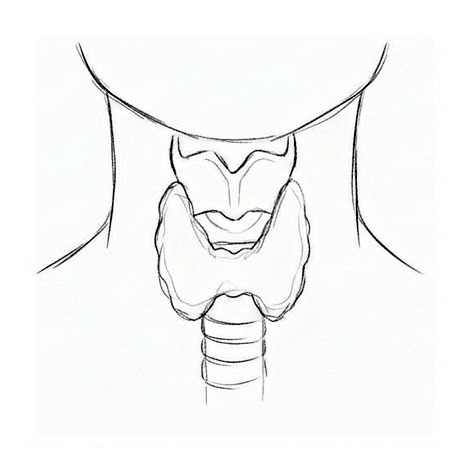
The thyroid lies at the front of the neck. Hypothyroidism means it does not produce enough thyroid hormone.
AI-generated schematic illustration; not a clinical image.
Understanding the topic
The thyroid at the front of the neck produces hormones affecting how cells use energy. Hypothyroidism means it supplies too little thyroid hormone. Thyroiditis damages cells and is a common cause, sometimes following an immune attack or pregnancy. Surgery, radioactive iodine, certain medicines, or pituitary problems can also contribute. The disorder concerns hormone availability and energy regulation rather than gland size alone or one isolated complaint of tiredness. Blood testing supports evaluation. Free T4 measures circulating thyroid hormone, while TSH is released by the pituitary to regulate thyroid activity. Together they describe availability and regulation. Antibody tests can investigate an immune-related cause, and other tests may assess associated changes such as cholesterol. The gland may be large, normal, or small. Its appearance or size alone does not settle whether hormone production is adequate.
Lesson 1
Insufficient thyroid hormone and metabolism & Effects across several body systems
Insufficient thyroid hormone and metabolism
The thyroid at the front of the neck produces hormones affecting how cells use energy. Hypothyroidism means it supplies too little thyroid hormone. Thyroiditis damages cells and is a common cause, sometimes following an immune attack or pregnancy. Surgery, radioactive iodine, certain medicines, or pituitary problems can also contribute. The disorder concerns hormone availability and energy regulation rather than gland size alone or one isolated complaint of tiredness.
Effects across several body systems
Symptoms can include fatigue, cold intolerance, constipation, dry skin, muscle discomfort, and weight gain. Hair and nails may become brittle, periods heavy or irregular, and mood depressed. Untreated disease can cause slower speech, slow heart rate, facial swelling, or low temperature. These varied effects reflect broad hormone influence. No single symptom establishes the diagnosis; similar complaints can occur for other reasons and need appropriate clinical evaluation.
Lesson 2
TSH and free T4 answer different questions & Replacement and follow-up
TSH and free T4 answer different questions
Blood testing supports evaluation. Free T4 measures circulating thyroid hormone, while TSH is released by the pituitary to regulate thyroid activity. Together they describe availability and regulation. Antibody tests can investigate an immune-related cause, and other tests may assess associated changes such as cholesterol. The gland may be large, normal, or small. Its appearance or size alone does not settle whether hormone production is adequate.
Replacement and follow-up
Treatment replaces missing thyroid hormone, commonly with levothyroxine. Many people require lifelong treatment even when symptoms improve. Follow-up blood tests assess whether replacement is appropriate. Food, supplements, other medicines, or product changes may matter. Excess replacement can cause palpitations, tremor, sweating, anxiety, or unexpected weight loss. Professional review guides adjustments; improvement in symptoms alone does not establish that treatment can stop or that the dose is correct.
Study guide
- Explain insufficient thyroid hormone and metabolism.
- Explain effects across several body systems.
- Explain tsh and free t4 answer different questions.
- Explain replacement and follow-up.
- Insufficient thyroid hormone and metabolism
- The thyroid at the front of the neck produces hormones affecting how cells use energy.
- Effects across several body systems
- Symptoms can include fatigue, cold intolerance, constipation, dry skin, muscle discomfort, and weight gain.
- TSH and free T4 answer different questions
- Blood testing supports evaluation.
- Replacement and follow-up
- Treatment replaces missing thyroid hormone, commonly with levothyroxine.
Lessons
Sources
- MedlinePlus en español — Hypothyroidismhttps://medlineplus.gov/spanish/ency/article/000353.htm
Original educational summaries; not a diagnosis or treatment plan. Read by a medical doctor and confirmed reliable, pending formal approval. Sources come from approved websites.