Heat-Related Illness
Introduction
Learn how heat illness develops, recognize heat exhaustion and heat stroke, and understand when urgent medical help is needed.
Learning objectives
- Explain how heat exposure affects cooling.
- Distinguish possible signs of heat exhaustion and heat stroke.
- Recognize possible warning signs of heat stroke.
- Describe risk reduction and the need for urgent response.
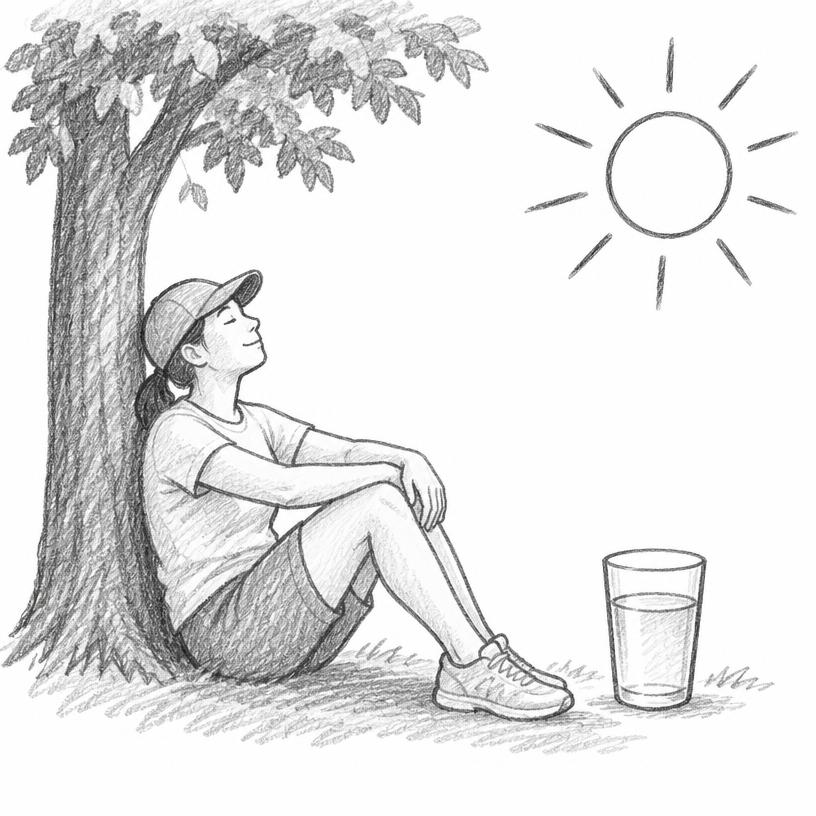
Heat and humidity can overwhelm cooling. Shade and appropriate fluids help reduce heat exposure risks.
AI-generated schematic illustration; not a clinical image.
Lesson 1
Heat exposure and early illness
How the body cools
Sweating helps regulate body temperature, but it becomes less effective when the air is very humid or environmental heat is intense. Prolonged exposure and strenuous activity outdoors add to the burden. Risk is not limited to athletes: older adults, young children, people with chronic illness, and people taking certain medicines may be more susceptible.
Alcohol can also contribute to risk. Planning around hot conditions and noticing changes early are practical ways to reduce exposure, but no single precaution guarantees protection. A person who feels unwell in the heat should move away from the hot setting and take the symptoms seriously.
Recognizing heat exhaustion
Heat cramps can occur during intense activity, while heat exhaustion may develop after substantial heat exposure and fluid loss. Possible features include heavy sweating, weakness or tiredness, nausea, dizziness, rapid breathing, and a fast but weak pulse. These signs are different from the rapid, strong pulse and confusion that may occur in heat stroke, although real presentations do not always follow a neat sequence.
Pay attention to the circumstances as well as symptoms, and seek medical advice when symptoms are severe, worsening, or concerning. Do not wait for a person to collapse before treating a heat-related problem as important.
Lesson 2
Heat stroke and urgent response
Warning signs of heat stroke
Heat stroke is a life-threatening condition in which body temperature can rise rapidly. Possible warning signs include confusion or other changes in mental state, dizziness, nausea, and skin that may be dry; a rapid, strong pulse can also occur. Not every person will show every listed sign.
When heat stroke is suspected, arrange immediate medical help through local emergency services rather than waiting to see whether the person improves. The urgency matters because severe overheating can damage the body and become fatal. This lesson is for recognition, not for making a diagnosis at home; a qualified responder or clinician must assess the person.
Reducing risk in hot conditions
Reduce unnecessary time in intense heat, especially during strenuous work or exercise, and pay attention to heat and humidity before planning outdoor activity. Build in opportunities to cool down and follow appropriate workplace or public-health guidance. Children, older adults, people who are ill, and people taking medicines that affect heat tolerance may need additional attention.
Avoid assuming that fitness prevents heat illness or that a person can always judge their own condition accurately while overheated. If warning signs appear, stop the activity and get help appropriate to the severity. Prevention lowers risk, but prompt recognition and escalation remain essential when a serious illness may already be developing.
Key concepts
- Heat exhaustion
- A heat-related illness that may involve heavy sweating and weakness.
- Heat stroke
- A life-threatening heat illness requiring urgent medical help.
Lessons
Key takeaways
- High heat, humidity, exertion, and prolonged exposure can challenge the body’s cooling mechanisms.
- Heat exhaustion may involve heavy sweating, weakness, and a rapid, weak pulse.
- Suspected heat stroke is an emergency; seek immediate help through local emergency services.
References & sources
Original educational summaries; not a diagnosis or treatment plan. Not independently confirmed by a medical educator.