The Heart: Chambers, Valves, and Blood Flow
The right atrium, right ventricle, left atrium, and left ventricle form four chambers.
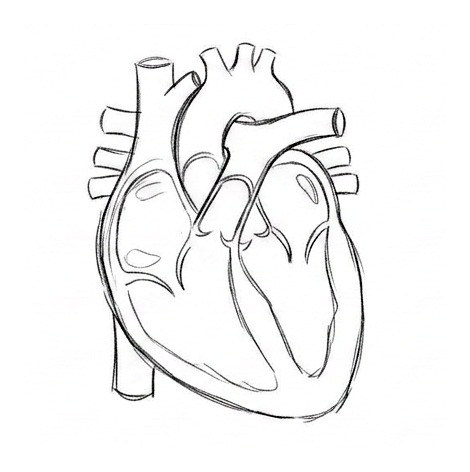
The heart’s four chambers and valves direct blood through the lungs and the rest of the body.
AI-generated schematic illustration; not a clinical image.
Understanding the topic
The right atrium, right ventricle, left atrium, and left ventricle form four chambers. Blood returning from the body enters the right atrium; blood from the lungs enters the left atrium. Ventricles pump it onward. The right ventricle sends blood to the lungs, and the left sends oxygen-rich blood around the body. Following this sequence makes circulation understandable rather than treating the heart as a single empty cavity. Pulmonary veins return oxygen-rich blood to the left atrium. It crosses the bicuspid, also called mitral, valve into the left ventricle. Ventricular contraction pushes it through the aortic valve into the aorta. The aorta and branches distribute blood to body tissues. This completes the route from pulmonary oxygen pickup to systemic delivery. Pulmonary veins therefore carry oxygen-rich blood despite veins often being associated with oxygen-poor blood.
Lesson 1
Four chambers in one circuit & Body to lungs
Four chambers in one circuit
The right atrium, right ventricle, left atrium, and left ventricle form four chambers. Blood returning from the body enters the right atrium; blood from the lungs enters the left atrium. Ventricles pump it onward. The right ventricle sends blood to the lungs, and the left sends oxygen-rich blood around the body. Following this sequence makes circulation understandable rather than treating the heart as a single empty cavity.
Body to lungs
Superior and inferior vena cava bring returning blood into the right atrium. It passes through the tricuspid valve into the right ventricle. Contraction pushes it through the pulmonary valve into the pulmonary artery, which carries it to the lungs for oxygen pickup. The returning vessels and outgoing artery have different positions in the route. Their names and direction of flow should be considered together, not memorized as disconnected labels.
Lesson 2
Lungs to body & Valves and forward movement
Lungs to body
Pulmonary veins return oxygen-rich blood to the left atrium. It crosses the bicuspid, also called mitral, valve into the left ventricle. Ventricular contraction pushes it through the aortic valve into the aorta. The aorta and branches distribute blood to body tissues. This completes the route from pulmonary oxygen pickup to systemic delivery. Pulmonary veins therefore carry oxygen-rich blood despite veins often being associated with oxygen-poor blood.
Valves and forward movement
Valves maintain one-directional flow. The tricuspid is between right atrium and ventricle; the pulmonary is on the route out toward lungs. The bicuspid lies before the left ventricle, and the aortic valve lies before the aorta. Valve positions connect chamber pumping with forward movement. Valves do not add oxygen or produce blood; they organize the route while muscular contraction supplies the force needed to move it.
Lesson 3
Body to lungs & Valves and forward movement
Body to lungs
Superior and inferior vena cava bring returning blood into the right atrium. It passes through the tricuspid valve into the right ventricle. Contraction pushes it through the pulmonary valve into the pulmonary artery, which carries it to the lungs for oxygen pickup. The returning vessels and outgoing artery have different positions in the route. Their names and direction of flow should be considered together, not memorized as disconnected labels.
Valves and forward movement
Valves maintain one-directional flow. The tricuspid is between right atrium and ventricle; the pulmonary is on the route out toward lungs. The bicuspid lies before the left ventricle, and the aortic valve lies before the aorta. Valve positions connect chamber pumping with forward movement. Valves do not add oxygen or produce blood; they organize the route while muscular contraction supplies the force needed to move it.
Study guide
- Explain four chambers in one circuit.
- Explain body to lungs.
- Explain lungs to body.
- Explain valves and forward movement.
- Explain body to lungs.
- Explain valves and forward movement.
- Four chambers in one circuit
- The right atrium, right ventricle, left atrium, and left ventricle form four chambers.
- Body to lungs
- Superior and inferior vena cava bring returning blood into the right atrium.
- Lungs to body
- Pulmonary veins return oxygen-rich blood to the left atrium.
- Valves and forward movement
- Valves maintain one-directional flow.
Lessons
Sources
- MedlinePlus en español — The Heart: Chambers, Valves, and Blood Flowhttps://medlineplus.gov/spanish/ency/anatomyvideos/000067.htm
Original educational summaries; not a diagnosis or treatment plan. Read by a medical doctor and confirmed reliable, pending formal approval. Sources come from approved websites.