Hearing Loss
How hearing works, why it declines, and what can be done about hearing loss.
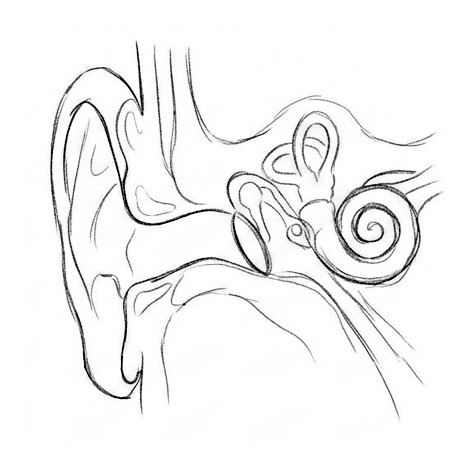
Sound travels through the ear canal and middle-ear bones to the cochlea in the inner ear.
AI-generated schematic illustration; not a clinical image.
Understanding the topic
Sound waves travel through the ear canal and vibrate the eardrum and three tiny bones of the middle ear. These vibrations reach the cochlea in the inner ear, where thousands of tiny hair cells convert them into electrical signals that the auditory nerve carries to the brain. Hearing loss occurs when any part of this pathway is damaged. It is classified as conductive when sound is blocked in the outer or middle ear, sensorineural when the inner ear or nerve is damaged, or mixed when both are involved. Age-related hearing loss, called presbycusis, develops gradually as inner ear structures wear out and is one of the most common conditions of older adults. Loud noise damages hair cells permanently, whether from a single explosion or years of exposure to machinery, concerts, or headphones at high volume. Other causes include ear infections, earwax blockage, certain medicines that are toxic to the ear, head injuries, and some genetic conditions. Hearing loss often advances so gradually that family members notice it first. Typical signs include frequently asking others to repeat themselves, turning up the television volume, difficulty following conversations in noisy places, and feeling that others mumble. Ringing in the ears, called tinnitus, often accompanies inner ear damage. Sudden hearing loss in one ear is a medical emergency that needs immediate evaluation. A hearing test with an audiologist measures the softest sounds a person can hear at different pitches. Treatment depends on the cause: earwax removal, treatment of infections, hearing aids that amplify sound, or cochlear implants for severe inner ear damage. Protecting the ears from loud noise with earplugs and keeping headphone volume moderate prevents much avoidable hearing loss. Untreated hearing loss is linked to social isolation and cognitive decline, so seeking help early matters.
Lesson 1
How hearing works and how it fails & Common causes across life
How hearing works and how it fails
Sound waves travel through the ear canal and vibrate the eardrum and three tiny bones of the middle ear. These vibrations reach the cochlea in the inner ear, where thousands of tiny hair cells convert them into electrical signals that the auditory nerve carries to the brain. Hearing loss occurs when any part of this pathway is damaged. It is classified as conductive when sound is blocked in the outer or middle ear, sensorineural when the inner ear or nerve is damaged, or mixed when both are involved.
Common causes across life
Age-related hearing loss, called presbycusis, develops gradually as inner ear structures wear out and is one of the most common conditions of older adults. Loud noise damages hair cells permanently, whether from a single explosion or years of exposure to machinery, concerts, or headphones at high volume. Other causes include ear infections, earwax blockage, certain medicines that are toxic to the ear, head injuries, and some genetic conditions.
Lesson 2
Recognizing the signs & Evaluation and options
Recognizing the signs
Hearing loss often advances so gradually that family members notice it first. Typical signs include frequently asking others to repeat themselves, turning up the television volume, difficulty following conversations in noisy places, and feeling that others mumble. Ringing in the ears, called tinnitus, often accompanies inner ear damage. Sudden hearing loss in one ear is a medical emergency that needs immediate evaluation.
Evaluation and options
A hearing test with an audiologist measures the softest sounds a person can hear at different pitches. Treatment depends on the cause: earwax removal, treatment of infections, hearing aids that amplify sound, or cochlear implants for severe inner ear damage. Protecting the ears from loud noise with earplugs and keeping headphone volume moderate prevents much avoidable hearing loss. Untreated hearing loss is linked to social isolation and cognitive decline, so seeking help early matters.
Study guide
- Explain how hearing works and how it fails.
- Explain common causes across life.
- Explain recognizing the signs.
- Explain evaluation and options.
- How hearing works and how it fails
- Sound waves travel through the ear canal and vibrate the eardrum and three tiny bones of the middle ear.
- Common causes across life
- Age-related hearing loss, called presbycusis, develops gradually as inner ear structures wear out and is one of the most common conditions of older adults.
- Recognizing the signs
- Hearing loss often advances so gradually that family members notice it first.
- Evaluation and options
- A hearing test with an audiologist measures the softest sounds a person can hear at different pitches.
Lessons
Sources
- MedlinePlus en español — Hearing Losshttps://medlineplus.gov/spanish/hearingloss.html
Original educational summaries; not a diagnosis or treatment plan. Read by a medical doctor and confirmed reliable, pending formal approval. Sources come from approved websites.