Gastroesophageal Reflux Disease
Reflux occurs when the muscle at the lower esophagus fails to close properly or relaxes at the wrong time.
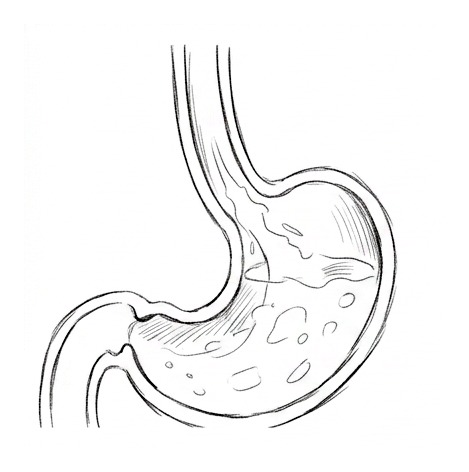
Reflux occurs when stomach contents flow back into the esophagus.
AI-generated schematic illustration; not a clinical image.
Understanding the topic
Reflux occurs when the muscle at the lower esophagus fails to close properly or relaxes at the wrong time. Stomach contents move backward and irritate the esophagus. Occasional reflux is common, but frequent symptoms or lining damage can indicate chronic reflux disease. Excess weight, pregnancy, tobacco exposure, and hiatal hernia increase likelihood. Some foods, drinks, and medicines can worsen symptoms in susceptible people. Heartburn is burning in the chest or throat, but reflux can occur without it. Evaluation begins with symptoms and history. Endoscopy inspects the esophageal and stomach lining and may include biopsy. Esophageal pH testing measures how frequently and how long acid reflux occurs. Manometry assesses esophageal movement during swallowing. Other imaging or thin-camera examinations may be selected. These investigations answer different questions about exposure to acid, movement, and damage, rather than every test serving an identical purpose. Smaller meals and avoiding lying down soon after eating can help.
Lesson 1
Lower esophageal closure and backflow & Heartburn and warning symptoms
Lower esophageal closure and backflow
Reflux occurs when the muscle at the lower esophagus fails to close properly or relaxes at the wrong time. Stomach contents move backward and irritate the esophagus. Occasional reflux is common, but frequent symptoms or lining damage can indicate chronic reflux disease. Excess weight, pregnancy, tobacco exposure, and hiatal hernia increase likelihood. Some foods, drinks, and medicines can worsen symptoms in susceptible people. Heartburn is burning in the chest or throat, but reflux can occur without it.
Heartburn and warning symptoms
Heartburn is burning in the chest or throat, but reflux can occur without it. Sour taste, regurgitation, cough, hoarseness, swallowing difficulty, and asthma-like symptoms are possible. Untreated disease can cause inflammation, scarring, or Barrett esophagus. Chest pain with breathlessness or jaw or arm pain needs immediate medical attention because it may reflect a heart problem rather than uncomplicated reflux. Symptom overlap must not delay evaluation.
Lesson 2
Endoscopy, pH testing, and manometry & Meal timing and treatment
Endoscopy, pH testing, and manometry
Evaluation begins with symptoms and history. Endoscopy inspects the esophageal and stomach lining and may include biopsy. Esophageal pH testing measures how frequently and how long acid reflux occurs. Manometry assesses esophageal movement during swallowing. Other imaging or thin-camera examinations may be selected. These investigations answer different questions about exposure to acid, movement, and damage, rather than every test serving an identical purpose. Smaller meals and avoiding lying down soon after eating can help.
Meal timing and treatment
Smaller meals and avoiding lying down soon after eating can help. Weight reduction when appropriate, stopping tobacco, raising the head of the bed, and avoiding personal triggers can also improve control. Medicines may include antacids or prescribed acid-reducing treatment. Surgery is used in selected cases, not routinely. Management aims to reduce symptoms and protect the lining; persistent swallowing problems or other concerning changes require assessment.
Study guide
- Explain lower esophageal closure and backflow.
- Explain heartburn and warning symptoms.
- Explain endoscopy, ph testing, and manometry.
- Explain meal timing and treatment.
- Lower esophageal closure and backflow
- Reflux occurs when the muscle at the lower esophagus fails to close properly or relaxes at the wrong time.
- Heartburn and warning symptoms
- Heartburn is burning in the chest or throat, but reflux can occur without it.
- Endoscopy, pH testing, and manometry
- Evaluation begins with symptoms and history.
- Meal timing and treatment
- Smaller meals and avoiding lying down soon after eating can help.
Lessons
Sources
- MedlinePlus en español — Gastroesophageal Reflux Diseasehttps://medlineplus.gov/spanish/gerd.html
Original educational summaries; not a diagnosis or treatment plan. Read by a medical doctor and confirmed reliable, pending formal approval. Sources come from approved websites.