Dehydration
Introduction
Understand common causes of fluid loss, recognize possible signs in adults and children, and identify when urgent assessment is needed.
Learning objectives
- Describe common causes and signs of fluid loss.
- Identify people who may be more vulnerable.
- Recognize possible signs in young children.
- Identify when symptoms call for urgent assessment.
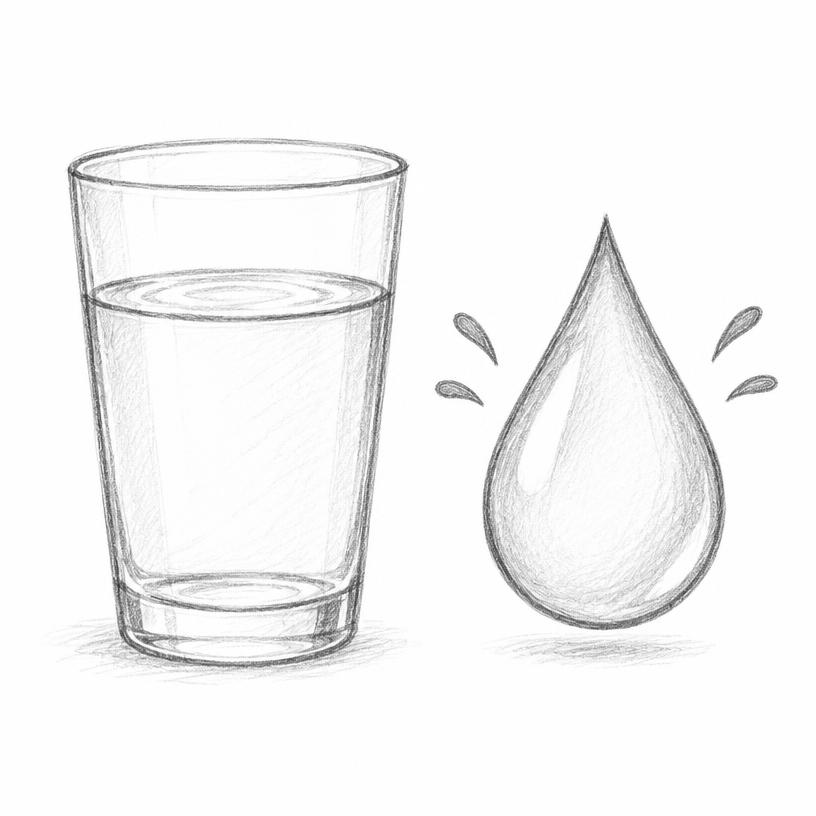
Dehydration happens when the body loses more fluid than it takes in.
AI-generated schematic illustration; not a clinical image.
Lesson 1
Fluid balance, causes, and common signs
Understanding fluid loss
The body needs adequate fluid to function. Dehydration develops when losses exceed what a person takes in, and it may result from diarrhea, vomiting, fever, heavy sweating, frequent urination, or simply not drinking enough. Heat and strenuous activity can compound losses.
The circumstances matter: someone who is ill may lose fluid quickly, while a person who is older may not feel thirst as strongly. Some chronic conditions and medicines can also affect fluid balance. Recognizing a likely source of loss helps frame the concern, but it does not by itself determine how serious the problem is or what treatment an individual needs.
Common signs and higher-risk groups
Adults may experience intense thirst, dry mouth, darker urine, less frequent urination, fatigue, or dizziness. These signs are not unique to dehydration, and their absence does not rule it out. Infants and young children can become dehydrated during gastrointestinal illness, while older adults may have a weaker sense of thirst.
People with ongoing health conditions or taking medicines that affect urination or sweating may also need particular care. Consider changes from the person’s usual state and the amount and duration of fluid loss. Seek qualified advice if symptoms persist, worsen, or occur alongside significant illness rather than relying on a single sign.
Lesson 2
Recognizing severe dehydration
Signs caregivers may notice in children
In babies and young children, dehydration may show up as a dry mouth or tongue, crying without tears, fewer wet diapers, or unusual sleepiness. The child’s age, recent vomiting or diarrhea, and overall behavior provide important context. Caregivers should not wait for every possible sign to appear: young children can become unwell quickly, and a marked change deserves attention.
This lesson does not provide a home diagnostic checklist or a universal fluid plan. If a child cannot keep fluids down, appears increasingly unwell, or a caregiver is worried, contact a healthcare professional promptly for guidance suited to the child.
When to seek urgent care
Dehydration ranges from mild to severe, and severe dehydration can be life-threatening. Confusion, fainting, very low or absent urination, or a significant decline in responsiveness should be treated as serious warning signs requiring urgent medical assessment. Persistent fluid losses from vomiting or diarrhea can make it difficult to replace what the body loses.
People with chronic illness or relevant medicines may need individualized advice rather than a generic recommendation. If a person is severely ill, worsening, or difficult to wake, seek immediate help through local emergency services. A clinician can assess the cause and severity and recommend appropriate care; do not delay urgent evaluation to try to manage a severe problem alone.
Key concepts
- Dehydration
- A state in which fluid losses exceed fluid intake.
- Fluid loss
- Reduction in body water through illness, sweating, or other causes.
Lessons
Key takeaways
- Dehydration develops when fluid losses exceed fluid intake.
- Illness, heat, sweating, and some medicines can contribute to fluid loss or inadequate replacement.
- Severe symptoms, including confusion or fainting, need urgent medical assessment.
References & sources
Original educational summaries; not a diagnosis or treatment plan. Not independently confirmed by a medical educator.