Cell Foundations: Organelles and Genetic Instructions
Cells provide structure, take in nutrients, convert energy, and carry out specialized work.
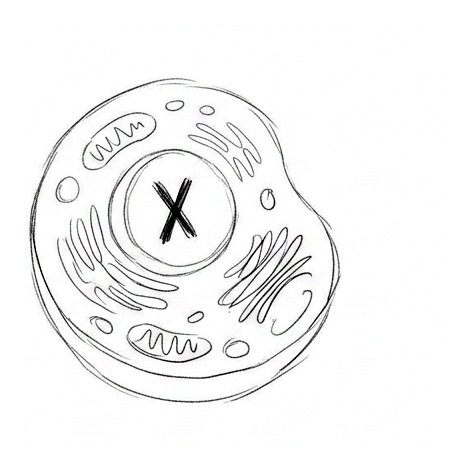
The nucleus contains genetic instructions; organelles carry out specialized functions within the cell.
AI-generated schematic illustration; not a clinical image.
Understanding the topic
Cells provide structure, take in nutrients, convert energy, and carry out specialized work. The membrane separates a cell from its surroundings while allowing substances to enter and leave. Cytoplasm includes the fluid cytosol and structures surrounding the nucleus. These features distinguish the outer boundary from the internal environment. Trillions of cells form the body, with specialized roles supported by their internal structures and the processes that occur within them. Endoplasmic reticulum processes molecules and helps move them to destinations. Golgi apparatus packages processed molecules for transport outside the cell. Cytoskeleton fibers support shape, movement, and division and provide internal transport routes. These are distinct but coordinated functions. Processing a molecule is not the same as packaging it for export, and both differ from maintaining physical organization or moving structures within a cell. Mitochondria convert food energy to a usable form and have genetic material distinct from nuclear DNA.
Lesson 1
Cell boundaries and internal environment & DNA and protein-making machinery
Cell boundaries and internal environment
Cells provide structure, take in nutrients, convert energy, and carry out specialized work. The membrane separates a cell from its surroundings while allowing substances to enter and leave. Cytoplasm includes the fluid cytosol and structures surrounding the nucleus. These features distinguish the outer boundary from the internal environment. Trillions of cells form the body, with specialized roles supported by their internal structures and the processes that occur within them.
DNA and protein-making machinery
The nucleus contains DNA and directs growth, maturation, division, and death. Its envelope protects hereditary material and separates it from the rest of the cell. Ribosomes use genetic instructions to make proteins; some float in cytoplasm, while others attach to endoplasmic reticulum. DNA storage and protein production are linked but different jobs. The nucleus houses instructions, whereas ribosomes assemble the molecules according to those instructions.
Lesson 2
Processing, packaging, and support & Energy conversion and recycling
Processing, packaging, and support
Endoplasmic reticulum processes molecules and helps move them to destinations. Golgi apparatus packages processed molecules for transport outside the cell. Cytoskeleton fibers support shape, movement, and division and provide internal transport routes. These are distinct but coordinated functions. Processing a molecule is not the same as packaging it for export, and both differ from maintaining physical organization or moving structures within a cell. Mitochondria convert food energy to a usable form and have genetic material distinct from nuclear DNA.
Energy conversion and recycling
Mitochondria convert food energy to a usable form and have genetic material distinct from nuclear DNA. They can make copies of themselves. Lysosomes and peroxisomes participate in breakdown and recycling, including handling harmful substances and worn components. These roles differ from protein assembly and export packaging. A functioning cell requires coordinated energy supply, cleanup, information use, and delivery, rather than one organelle carrying out every task.
Study guide
- Explain cell boundaries and internal environment.
- Explain dna and protein-making machinery.
- Explain processing, packaging, and support.
- Explain energy conversion and recycling.
- Cell boundaries and internal environment
- Cells provide structure, take in nutrients, convert energy, and carry out specialized work.
- DNA and protein-making machinery
- The nucleus contains DNA and directs growth, maturation, division, and death.
- Processing, packaging, and support
- Endoplasmic reticulum processes molecules and helps move them to destinations.
- Energy conversion and recycling
- Mitochondria convert food energy to a usable form and have genetic material distinct from nuclear DNA.
Lessons
Sources
- MedlinePlus en español — Cell Foundations: Organelles and Genetic Instructionshttps://medlineplus.gov/spanish/genetica/entender/basica/celula/
Original educational summaries; not a diagnosis or treatment plan. Read by a medical doctor and confirmed reliable, pending formal approval. Sources come from approved websites.