Brain Tumors: Symptoms and Evaluation
A brain tumor is abnormal cell growth in brain tissue.
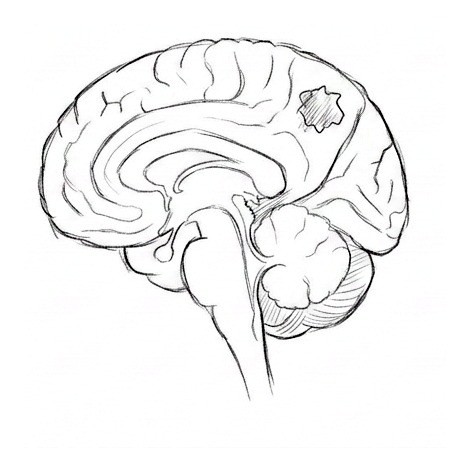
A brain tumor is an abnormal growth of tissue. Symptoms depend on its size and location.
AI-generated schematic illustration; not a clinical image.
Understanding the topic
A brain tumor is abnormal cell growth in brain tissue. Benign tumors are noncancerous; malignant tumors contain cancer cells. Primary tumors begin in the brain, while metastatic tumors spread there from elsewhere. These descriptions answer different questions and are not interchangeable. Origin and cancer status help characterize the disease, rather than assuming every tumor has the same behavior or that the word primary automatically means benign. Evaluation combines neurological examination with tests such as MRI, CT, or biopsy. Imaging and tissue examination provide different information rather than repeating a symptom list. Diagnosis requires clinical interpretation, not identifying a headache or memory change alone. Appropriate tests depend on circumstances. Understanding the pathway helps separate a reason to seek assessment from evidence that actually establishes what a lesion is and how it should be characterized.
Lesson 1
Cancer status versus tumor origin & Symptoms involving different functions
Cancer status versus tumor origin
A brain tumor is abnormal cell growth in brain tissue. Benign tumors are noncancerous; malignant tumors contain cancer cells. Primary tumors begin in the brain, while metastatic tumors spread there from elsewhere. These descriptions answer different questions and are not interchangeable. Origin and cancer status help characterize the disease, rather than assuming every tumor has the same behavior or that the word primary automatically means benign.
Symptoms involving different functions
Headaches, nausea, vomiting, changes in speaking, hearing, or vision, and balance problems may occur. Thinking, memory, strength, alertness, mood, and behavior can also change; seizures are possible. Not everyone has all symptoms, and one complaint does not establish a tumor. The range reflects different brain functions. Symptoms can prompt evaluation but do not provide the structural or tissue evidence required to identify a particular diagnosis.
Lesson 2
Neurological assessment and tests & Treatment and active monitoring
Neurological assessment and tests
Evaluation combines neurological examination with tests such as MRI, CT, or biopsy. Imaging and tissue examination provide different information rather than repeating a symptom list. Diagnosis requires clinical interpretation, not identifying a headache or memory change alone. Appropriate tests depend on circumstances. Understanding the pathway helps separate a reason to seek assessment from evidence that actually establishes what a lesion is and how it should be characterized.
Treatment and active monitoring
Options include surgery, radiation, chemotherapy, targeted therapy, or watchful waiting, often in combination. Watchful waiting means monitoring without immediate treatment until changes warrant action; it does not abandon follow-up. Targeted treatment addresses particular cancer features with the aim of reducing damage to normal cells. The plan varies with tumor characteristics and individual circumstances rather than assuming one procedure or medicine fits every brain tumor. A brain tumor is abnormal cell growth in brain tissue.
Study guide
- Explain cancer status versus tumor origin.
- Explain symptoms involving different functions.
- Explain neurological assessment and tests.
- Explain treatment and active monitoring.
- Cancer status versus tumor origin
- A brain tumor is abnormal cell growth in brain tissue.
- Symptoms involving different functions
- Headaches, nausea, vomiting, changes in speaking, hearing, or vision, and balance problems may occur.
- Neurological assessment and tests
- Evaluation combines neurological examination with tests such as MRI, CT, or biopsy.
- Treatment and active monitoring
- Options include surgery, radiation, chemotherapy, targeted therapy, or watchful waiting, often in combination.
Lessons
Sources
- MedlinePlus en español — Brain Tumors: Symptoms and Evaluationhttps://medlineplus.gov/spanish/braintumors.html
Original educational summaries; not a diagnosis or treatment plan. Read by a medical doctor and confirmed reliable, pending formal approval. Sources come from approved websites.