Vitamin D, Calcium, and Bone Health
Vitamin D helps absorb calcium, an important bone component.
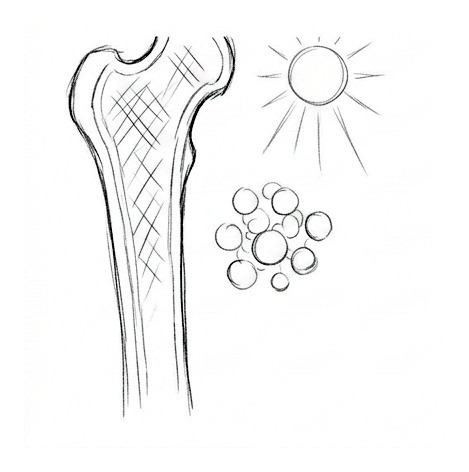
Vitamin D helps the body absorb calcium, which supports bone health.
AI-generated schematic illustration; not a clinical image.
Understanding the topic
Vitamin D helps absorb calcium, an important bone component. Having calcium in the diet and absorbing it are connected but different requirements. Vitamin D also contributes to muscle, nervous-system, and immune function. Deficiency means insufficient vitamin D for health. Established roles do not imply extra supplementation improves every aspect of health. Bone health depends on adequate nutrients and appropriate use rather than treating one vitamin as a universal solution. Deficiency can result from low intake, limited sunlight, poor intestinal absorption, or liver or kidney difficulty activating vitamin D. Some medicines can interfere with absorption or conversion. Obtaining a nutrient and using it in the body are different steps. Deficiency is therefore not always explained by one food choice. Evaluation considers mechanisms and risk instead of assuming supplements automatically address every possible reason for low levels.
Lesson 1
Vitamin D supports calcium absorption & Food, sunlight, and supplements
Vitamin D supports calcium absorption
Vitamin D helps absorb calcium, an important bone component. Having calcium in the diet and absorbing it are connected but different requirements. Vitamin D also contributes to muscle, nervous-system, and immune function. Deficiency means insufficient vitamin D for health. Established roles do not imply extra supplementation improves every aspect of health. Bone health depends on adequate nutrients and appropriate use rather than treating one vitamin as a universal solution.
Food, sunlight, and supplements
Vitamin D comes from skin production after sunlight, food, and supplements. Excess sun exposure carries skin aging and cancer risks, so it is not an unlimited-risk solution. Requirements vary by age and circumstances. People with increased deficiency risk may need individual advice. Sources are different ways to obtain the vitamin; deciding what is appropriate involves needs, exposure risks, and health context rather than simply maximizing one source.
Lesson 2
Absorption and activation problems & Bone consequences and safe correction
Absorption and activation problems
Deficiency can result from low intake, limited sunlight, poor intestinal absorption, or liver or kidney difficulty activating vitamin D. Some medicines can interfere with absorption or conversion. Obtaining a nutrient and using it in the body are different steps. Deficiency is therefore not always explained by one food choice. Evaluation considers mechanisms and risk instead of assuming supplements automatically address every possible reason for low levels.
Bone consequences and safe correction
Severe deficiency can cause rickets in children or osteomalacia, softened bones, in adults. Blood testing may help assess levels when deficiency is suspected. Supplements may treat it, with amount and duration guided professionally. Too much vitamin D can be harmful. The aim is correcting an identified need safely, not pursuing the highest dose. Bone symptoms and nutrient findings require context because not all skeletal problems have the same cause.
Study guide
- Explain vitamin d supports calcium absorption.
- Explain food, sunlight, and supplements.
- Explain absorption and activation problems.
- Explain bone consequences and safe correction.
- Vitamin D supports calcium absorption
- Vitamin D helps absorb calcium, an important bone component.
- Food, sunlight, and supplements
- Vitamin D comes from skin production after sunlight, food, and supplements.
- Absorption and activation problems
- Deficiency can result from low intake, limited sunlight, poor intestinal absorption, or liver or kidney difficulty activating vitamin D.
- Bone consequences and safe correction
- Severe deficiency can cause rickets in children or osteomalacia, softened bones, in adults.
Lessons
Sources
- MedlinePlus en español — Vitamin D, Calcium, and Bone Healthhttps://medlineplus.gov/spanish/vitaminddeficiency.html
Original educational summaries; not a diagnosis or treatment plan. Read by a medical doctor and confirmed reliable, pending formal approval. Sources come from approved websites.