Anemia
Anemia means there are not enough healthy red blood cells to deliver oxygen adequately.
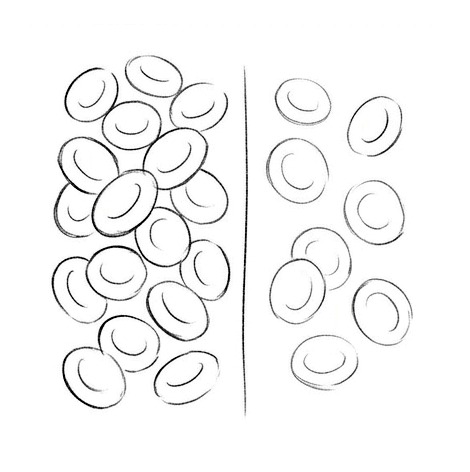
Anemia reduces the blood’s ability to carry oxygen. Some forms involve fewer or paler red blood cells.
AI-generated schematic illustration; not a clinical image.
Understanding the topic
Anemia means there are not enough healthy red blood cells to deliver oxygen adequately. Hemoglobin carries oxygen inside these cells. Most production occurs in bone marrow and is stimulated by erythropoietin from the kidneys. Iron, vitamin B12, and folate are important nutrients. Anemia can arise from blood loss, nutrient deficiency, premature cell destruction, chronic illness, inherited disorders, or marrow problems. Mild or slowly developing anemia may produce no symptoms. Evaluation combines examination and blood tests. A clinician may detect pallor, rapid heartbeat, a heart murmur, or low blood pressure. A complete blood count, reticulocyte count, and measurements of iron, B12, or folate can help investigate the problem. Further tests may assess bleeding, chronic disease, or other mechanisms. Recognizing anemia and explaining why it developed are separate clinical questions. Treatment targets the underlying cause rather than one remedy for everyone.
Lesson 1
Red cells and oxygen delivery & Fatigue, pallor, and breathlessness
Red cells and oxygen delivery
Anemia means there are not enough healthy red blood cells to deliver oxygen adequately. Hemoglobin carries oxygen inside these cells. Most production occurs in bone marrow and is stimulated by erythropoietin from the kidneys. Iron, vitamin B12, and folate are important nutrients. Anemia can arise from blood loss, nutrient deficiency, premature cell destruction, chronic illness, inherited disorders, or marrow problems. Mild or slowly developing anemia may produce no symptoms.
Fatigue, pallor, and breathlessness
Mild or slowly developing anemia may produce no symptoms. Early complaints can include unusual tiredness, weakness, headache, or concentration difficulty. As anemia worsens, pale skin, dizziness when standing, and shortness of breath with light activity or at rest may develop. Brittle nails and craving ice or other nonfood substances can occur. These findings vary and do not identify the exact cause. Evaluation combines examination and blood tests.
Lesson 2
Investigating the cause with blood tests & Cause-specific treatment
Investigating the cause with blood tests
Evaluation combines examination and blood tests. A clinician may detect pallor, rapid heartbeat, a heart murmur, or low blood pressure. A complete blood count, reticulocyte count, and measurements of iron, B12, or folate can help investigate the problem. Further tests may assess bleeding, chronic disease, or other mechanisms. Recognizing anemia and explaining why it developed are separate clinical questions. Treatment targets the underlying cause rather than one remedy for everyone.
Cause-specific treatment
Treatment targets the underlying cause rather than one remedy for everyone. Options may include iron, B12, folate, medicines that suppress immune activity, erythropoietin, or blood transfusion. Severe anemia can impair oxygen delivery to vital organs including the heart. The outlook depends on the responsible condition and often improves when it is treated. Nutrient supplements are one treatment pathway, not a universal solution. Anemia means there are not enough healthy red blood cells to deliver oxygen adequately.
Study guide
- Explain red cells and oxygen delivery.
- Explain fatigue, pallor, and breathlessness.
- Explain investigating the cause with blood tests.
- Explain cause-specific treatment.
- Red cells and oxygen delivery
- Anemia means there are not enough healthy red blood cells to deliver oxygen adequately.
- Fatigue, pallor, and breathlessness
- Mild or slowly developing anemia may produce no symptoms.
- Investigating the cause with blood tests
- Evaluation combines examination and blood tests.
- Cause-specific treatment
- Treatment targets the underlying cause rather than one remedy for everyone.
Lessons
Sources
- MedlinePlus en español — Anemiahttps://medlineplus.gov/spanish/ency/article/000560.htm
Original educational summaries; not a diagnosis or treatment plan. Read by a medical doctor and confirmed reliable, pending formal approval. Sources come from approved websites.