Alzheimer's Disease
The most common cause of dementia, a progressive brain disease that erodes memory and thinking.
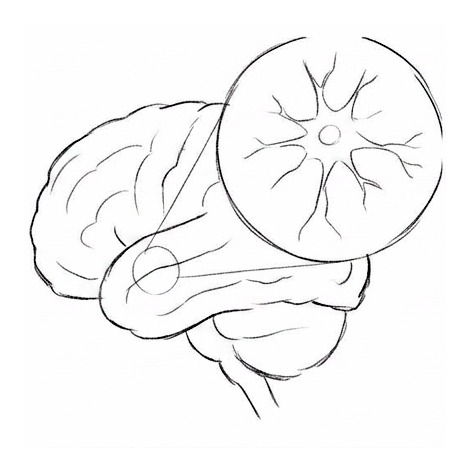
Alzheimer’s disease involves changes in brain cells, including abnormal amyloid and tau proteins.
AI-generated schematic illustration; not a clinical image.
Understanding the topic
Alzheimer's disease is an irreversible, progressive brain disorder and the most common cause of dementia in older adults. In the brain, abnormal deposits of a protein called amyloid form plaques between nerve cells, while twisted fibers of tau protein build up inside them. Nerve cells lose connections and die, and the brain shrinks. Memory loss is usually the first sign, but the disease gradually destroys thinking, language, and the ability to carry out simple tasks. Occasionally forgetting a name and remembering it later is part of normal aging. In Alzheimer's, memory loss disrupts daily life: repeating questions, getting lost in familiar places, misplacing things in unusual spots, and poor judgment. As the disease advances, people may experience confusion, mood and personality changes, suspicion, and difficulty speaking, swallowing, and walking. Symptoms typically appear after age 60, and risk increases with age. There is no single test for Alzheimer's. Doctors use medical history, mental status tests, neurological examination, blood tests, and brain imaging to rule out other causes of memory problems, some of which are treatable. Age is the greatest known risk factor; family history and certain genes also play a role. Researchers believe the disease develops from a combination of genetic, lifestyle, and environmental factors over many years. No treatment currently stops Alzheimer's, but some medicines can temporarily lessen symptoms or slow their worsening, and newer therapies target amyloid in early disease. Managing other conditions, staying physically and socially active, and keeping a structured routine help maintain quality of life. The disease places heavy demands on caregivers, who benefit from education, respite, and support groups. Planning legal, financial, and care decisions early is recommended.
Lesson 1
A progressive disease of the brain & More than normal aging
A progressive disease of the brain
Alzheimer's disease is an irreversible, progressive brain disorder and the most common cause of dementia in older adults. In the brain, abnormal deposits of a protein called amyloid form plaques between nerve cells, while twisted fibers of tau protein build up inside them. Nerve cells lose connections and die, and the brain shrinks. Memory loss is usually the first sign, but the disease gradually destroys thinking, language, and the ability to carry out simple tasks.
More than normal aging
Occasionally forgetting a name and remembering it later is part of normal aging. In Alzheimer's, memory loss disrupts daily life: repeating questions, getting lost in familiar places, misplacing things in unusual spots, and poor judgment. As the disease advances, people may experience confusion, mood and personality changes, suspicion, and difficulty speaking, swallowing, and walking. Symptoms typically appear after age 60, and risk increases with age.
Lesson 2
Diagnosis and causes & Care and support
Diagnosis and causes
There is no single test for Alzheimer's. Doctors use medical history, mental status tests, neurological examination, blood tests, and brain imaging to rule out other causes of memory problems, some of which are treatable. Age is the greatest known risk factor; family history and certain genes also play a role. Researchers believe the disease develops from a combination of genetic, lifestyle, and environmental factors over many years.
Care and support
No treatment currently stops Alzheimer's, but some medicines can temporarily lessen symptoms or slow their worsening, and newer therapies target amyloid in early disease. Managing other conditions, staying physically and socially active, and keeping a structured routine help maintain quality of life. The disease places heavy demands on caregivers, who benefit from education, respite, and support groups. Planning legal, financial, and care decisions early is recommended.
Study guide
- Explain a progressive disease of the brain.
- Explain more than normal aging.
- Explain diagnosis and causes.
- Explain care and support.
- A progressive disease of the brain
- Alzheimer's disease is an irreversible, progressive brain disorder and the most common cause of dementia in older adults.
- More than normal aging
- Occasionally forgetting a name and remembering it later is part of normal aging.
- Diagnosis and causes
- There is no single test for Alzheimer's.
- Care and support
- No treatment currently stops Alzheimer's, but some medicines can temporarily lessen symptoms or slow their worsening, and newer therapies target amyloid in early disease.
Lessons
Sources
- MedlinePlus en español — Alzheimer's Diseasehttps://medlineplus.gov/spanish/alzheimersdisease.html
Original educational summaries; not a diagnosis or treatment plan. Read by a medical doctor and confirmed reliable, pending formal approval. Sources come from approved websites.