Allergies and Immune Reactions
An allergy occurs when immune defenses react to a substance that does not trouble most people.
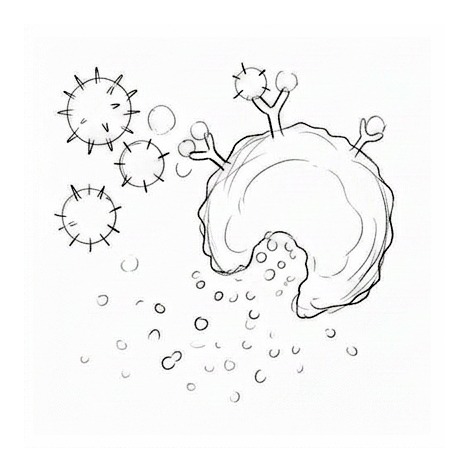
In some allergic reactions, immune cells release histamine after exposure to an allergen.
AI-generated schematic illustration; not a clinical image.
Understanding the topic
An allergy occurs when immune defenses react to a substance that does not trouble most people. Instead of responding only to harmful germs, the system responds to a false alarm. Genes and environment probably both influence susceptibility. A person may react to more than one substance. This mechanism explains why an ordinary exposure causes symptoms in one person but not another and why allergy is not the same as an infection. Reactions may cause sneezing, runny nose, itching, rash, or swelling and may involve asthma or other breathing problems. Severity ranges from mild to dangerous. Anaphylaxis is a severe allergic reaction that can be fatal. The word allergy does not describe a predictable degree of seriousness. A mild nasal reaction and a severe widespread reaction require different clinical consideration, so an individual history matters more than a broad label.
Lesson 1
Immune defenses responding to a false alarm & Inhaled, swallowed, and injected allergens
Immune defenses responding to a false alarm
An allergy occurs when immune defenses react to a substance that does not trouble most people. Instead of responding only to harmful germs, the system responds to a false alarm. Genes and environment probably both influence susceptibility. A person may react to more than one substance. This mechanism explains why an ordinary exposure causes symptoms in one person but not another and why allergy is not the same as an infection.
Inhaled, swallowed, and injected allergens
Pollen, dust mites, mold spores, and animal dander are common allergens. Foods, medicines, and insect stings can also trigger reactions. Allergy is therefore not restricted to outdoor pollen or seasonal nasal symptoms. The relevant trigger differs between people, and practical avoidance depends on the specific exposure. Avoiding a food or medicine is a different task from reducing inhaled pollen or preventing contact with an insect sting.
Lesson 2
Symptoms and anaphylaxis & Testing and trigger-based management
Symptoms and anaphylaxis
Reactions may cause sneezing, runny nose, itching, rash, or swelling and may involve asthma or other breathing problems. Severity ranges from mild to dangerous. Anaphylaxis is a severe allergic reaction that can be fatal. The word allergy does not describe a predictable degree of seriousness. A mild nasal reaction and a severe widespread reaction require different clinical consideration, so an individual history matters more than a broad label.
Testing and trigger-based management
Skin and blood tests help investigate which substances may cause reactions. Management can involve avoidance, medicines, or allergy injections. Avoidance limits exposure, while other approaches address the allergic response. Tests and symptoms need context rather than assuming every sneeze or rash has the same cause. Because several triggers may coexist, useful care identifies relevant exposures and matches a strategy to the person’s allergies and reaction history.
Study guide
- Explain immune defenses responding to a false alarm.
- Explain inhaled, swallowed, and injected allergens.
- Explain symptoms and anaphylaxis.
- Explain testing and trigger-based management.
- Immune defenses responding to a false alarm
- An allergy occurs when immune defenses react to a substance that does not trouble most people.
- Inhaled, swallowed, and injected allergens
- Pollen, dust mites, mold spores, and animal dander are common allergens.
- Symptoms and anaphylaxis
- Reactions may cause sneezing, runny nose, itching, rash, or swelling and may involve asthma or other breathing problems.
- Testing and trigger-based management
- Skin and blood tests help investigate which substances may cause reactions.
Lessons
Sources
- MedlinePlus en español — Allergies and Immune Reactionshttps://medlineplus.gov/spanish/allergy.html
Original educational summaries; not a diagnosis or treatment plan. Read by a medical doctor and confirmed reliable, pending formal approval. Sources come from approved websites.